A bumpy lawn can come from settling, earthworm activity, frost heave, poor grading, animal digging or old construction disturbance. The right fix depends on whether you have small surface irregularities or true low spots.
The biggest mistake is trying to bury the lawn under a thick layer of new soil. Colorado State University Extension cautions that topdressing a bumpy lawn with a different soil or sand can create layers that interfere with water movement and rooting.
Quick Answer
- Identify the cause before adding material.
- For mild bumpiness, core aeration can help gradually smooth the surface.
- Use only thin, compatible topdressing when appropriate.
- Avoid heavy rolling on wet soil because it causes compaction.
- Repair deep depressions by lifting turf or reseeding after correcting the grade.
- Do not bury existing grass under several inches of soil.
Step 1: Find Out Why the Lawn Is Uneven
Walk the lawn when it is dry and mark high and low areas.
Common causes include:
- soil settling after construction;
- poor original grading;
- earthworm castings;
- freeze-thaw movement;
- burrowing animals;
- tree-root growth;
- heavy traffic and compaction;
- rotting buried organic material.
If the lawn has drainage problems, standing water or a collapsing trench, solve the underlying issue before cosmetic leveling.
Small Bumps: Start With Core Aeration
Colorado State notes that core cultivation and spreading the plugs back across the lawn may help level a severely bumpy surface over time.
A core aerator removes small plugs of soil. As those plugs dry and break apart, they redistribute soil across minor low areas while also reducing compaction.
Do Not Confuse Core Aeration With Spike Aeration
Hollow-tine aeration physically removes soil plugs. Solid spikes mostly push soil sideways and can increase compaction around the hole.
For compacted, uneven turf, hollow cores are the more useful tool.
Can You Use a Lawn Leveling Rake?
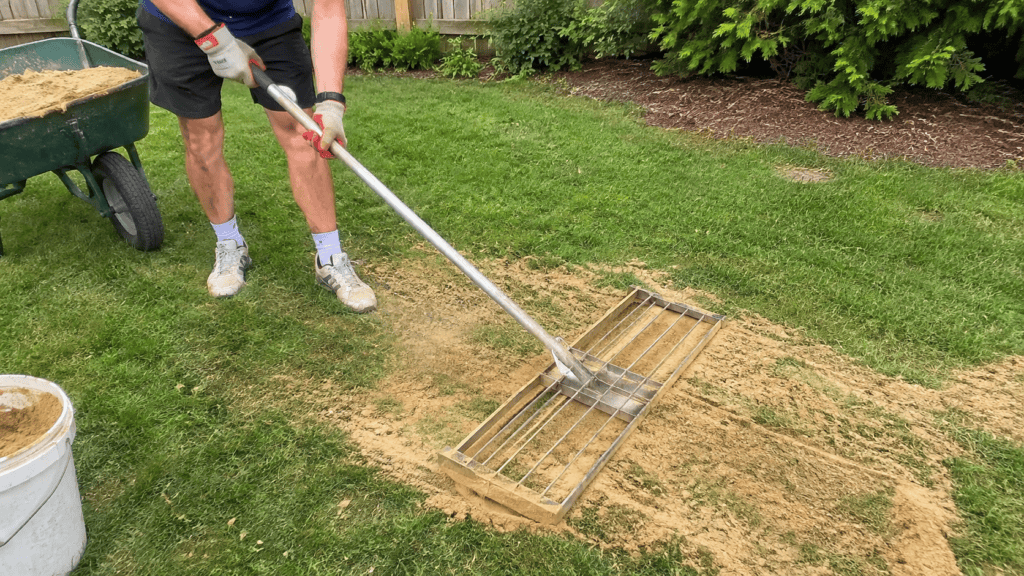
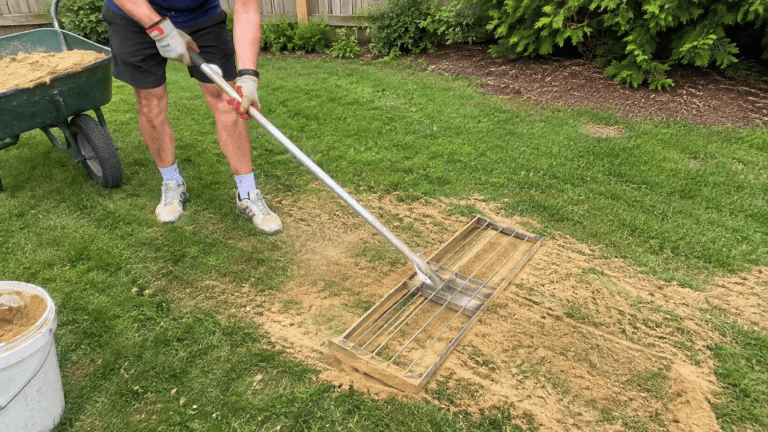
Yes, but a leveling rake is a spreading tool, not a cure for major grading problems.
It works well for distributing a thin compatible topdressing across shallow depressions and for smoothing prepared soil during renovation.
See our best lawn leveling rakes if you need a wide tool for spreading material.
How Much Topdressing Is Safe?
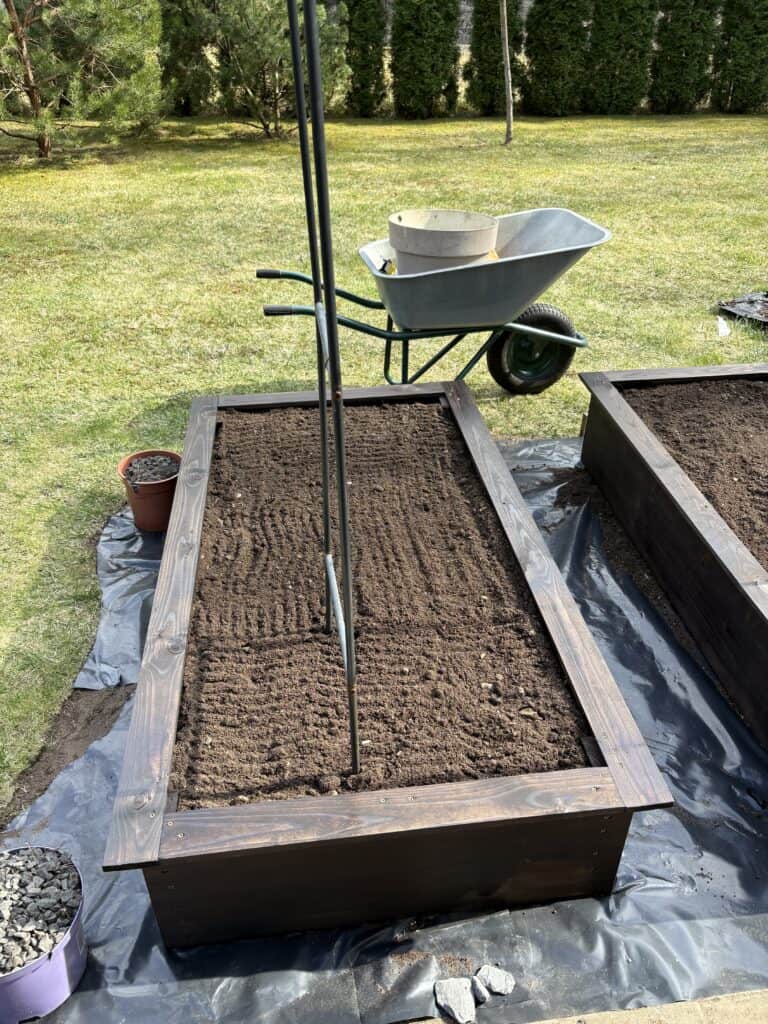
Keep applications thin enough that grass blades remain exposed. If you bury the turf, photosynthesis stops and the lawn may die beneath the new material.
For compost used as a turf topdressing, University of Minnesota Extension suggests roughly a 1/4-inch layer. Penn State similarly recommends thin surface applications of compost rather than repeated thick layers.
Why Sand Is Not a Universal Leveling Material
Sand behaves differently from many lawn soils. Adding a sand layer over clay or loam can create a distinct interface that changes water movement.
Colorado State specifically warns against using soil/sand topdressing as a routine way to smooth a bumpy lawn when the material differs from the existing soil.
If sand is part of a professional turf program, it is usually selected to closely match the existing root-zone material and applied repeatedly in controlled amounts.
What About Compost?
Quality screened compost can be useful in thin applications because it adds organic matter and can temporarily help smooth minor unevenness.
It is not the right material for filling a 2-inch-deep hole. Deep depressions need structural soil and grading.
Choose any topdressing material carefully so its texture is compatible with the soil already supporting the turf.
How to Fix a Small Low Spot
- Mow the lawn slightly shorter than normal.
- Rake loose debris from the depression.
- Add a very thin layer of compatible soil or screened compost.
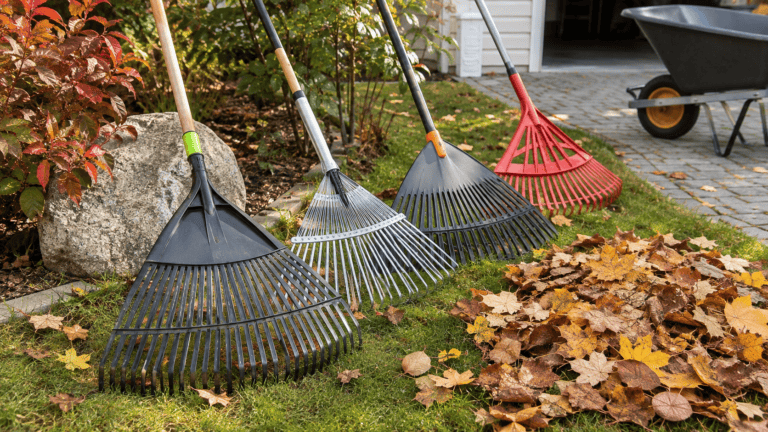
- Work it between grass blades with a leveling or leaf rake.
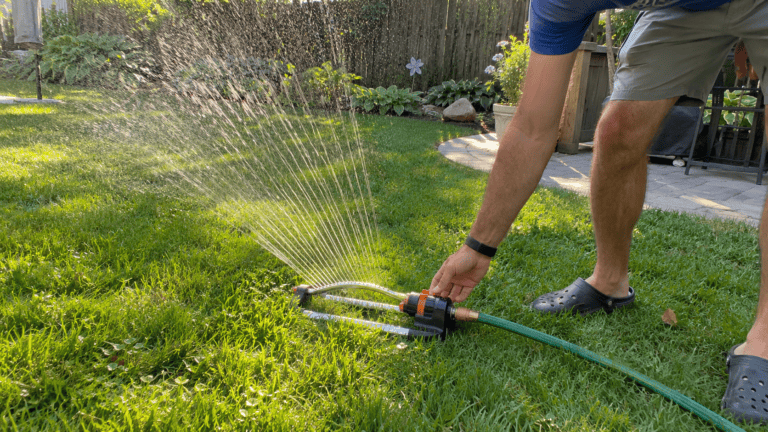
- Water lightly.
- Allow grass to grow through.
- Repeat later if more material is needed.
Gradual correction is safer than burying the grass in one application.
How to Fix a Deep Low Spot
If a depression is deep enough to hold water, a surface topdressing is not the best fix.
Cut and lift the sod, add compatible topsoil underneath, firm it gently and replace the turf at the correct level. For very large areas, regrading and reseeding may be easier.
Should You Roll a Bumpy Lawn?
A light roller can help firm newly prepared soil, but heavy rollers compact established turf.
Colorado State notes that heavy rolling can flatten bumps but is likely to cause soil compaction and should be followed by core cultivation.
For most homeowner lawns, rolling is not the first choice.
When to Level the Lawn
Work while the grass is actively growing so it can recover quickly.
For cool-season lawns, late summer into early fall is often a good period for aeration and repair. Spring can also work if the lawn is actively growing and you can manage weeds and watering.
Avoid major leveling during drought or extreme heat.
Leveling Around Tree Roots
Do not bury large exposed tree roots under thick soil simply to make mowing easier. Adding soil over roots can reduce oxygen and damage the tree.
Consider expanding a mulch bed around the tree instead.
What if the Lawn Is Uneven Because of Earthworms?
Earthworm casts can create surface roughness but worms are generally beneficial to soil.
Let casts dry, then rake or brush them across the lawn. Core aeration can also gradually improve the surface.
After Leveling: Water and Mow Carefully
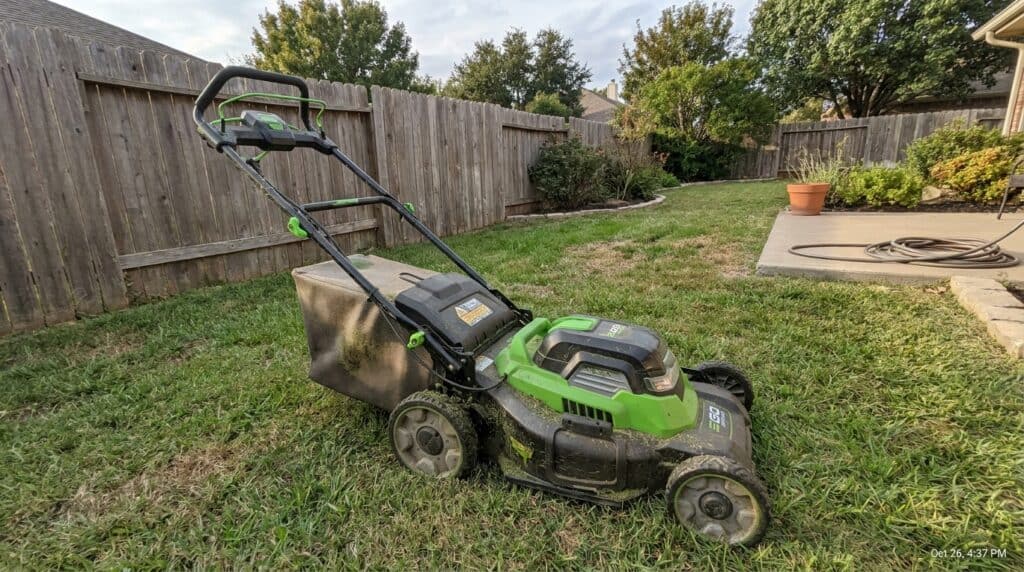
Keep repaired areas evenly moist while grass recovers. Do not mow newly raised or reseeded areas until the turf is established enough that the mower will not tear it up.
Frequently Asked Questions
Can I put topsoil over an existing lawn?
Only in very thin layers for minor smoothing. Deep topsoil will bury and kill grass.
What is the best material for leveling a lawn?
The safest material is compatible with the existing soil. Thin screened compost can be useful for minor surface smoothing and soil improvement.
Will a leveling rake fix bumps?
It helps spread material evenly, but it cannot correct deep settlement or underlying drainage problems.
Should I use sand to level clay soil?
Not as a casual surface treatment. Different soil layers can interfere with water and air movement.
Bottom Line
Fix mild lawn bumpiness gradually. Core aerate, spread thin compatible material where needed and use a leveling rake to smooth it. Deep depressions need actual grading, not repeated piles of topdressing.