The easiest way to know when to start seeds indoors is to work backward from your average last spring frost date. Different vegetables need different amounts of indoor growing time, so starting everything on the same weekend usually creates problems.
University of Maryland Extension gives useful ranges: leafy greens often need about 2 to 4 weeks indoors; cabbage-family crops 4 to 6 weeks; cucumbers, squash and melons 3 to 5 weeks; tomatoes about 5 to 6 weeks; and peppers, eggplants and onions about 8 to 10 weeks.
Those numbers are a starting point. Always check the seed packet because varieties differ, and local transplant dates depend on soil temperature and weather.
Quick Seed-Starting Timeline
| Crop | Start indoors before planting out | Notes |
|---|---|---|
| Onions | 8–10 weeks | Can be started early; transplant while still small |
| Peppers | 8–10 weeks | Slow early growth; warm soil helps germination |
| Eggplant | 8–10 weeks | Warm-season crop; needs strong light |
| Broccoli | 4–6 weeks | Cool-season crop |
| Cabbage | 4–6 weeks | Harden off before transplanting |
| Cauliflower | 4–6 weeks | Avoid letting transplants become stressed |
| Tomatoes | 5–6 weeks | Starting too early often creates oversized plants |
| Cucumber | 3–5 weeks | Does not need a long indoor period |
| Squash | 3–5 weeks | Can also be direct-sown |
| Melons | 3–5 weeks | Transplant after weather is reliably warm |
| Leafy greens | 2–4 weeks | Some are easier to direct-sow |
Step 1: Find Your Average Last Frost Date
Your average last frost date is the historical date after which a freezing night becomes less likely. It is not a guarantee. A late frost can still happen, so always watch the forecast before transplanting tender crops.
Use a reputable local Extension service, weather station or climate dataset rather than a generic national map when possible.
Step 2: Count Back the Correct Number of Weeks
Once you know the likely outdoor planting window, count backward by the crop’s recommended indoor growing time.
Example: If you expect to transplant tomatoes around May 15 and the variety needs about 6 weeks indoors, sow around the first week of April. Do not automatically sow tomatoes in February just because you are eager to start gardening.
University of Maryland Extension specifically warns that sowing too early can produce tall, root-bound plants that do not perform well after transplanting.
Step 3: Separate Cool-Season and Warm-Season Crops
Cool-season crops
Broccoli, cabbage, cauliflower and many leafy greens tolerate cooler conditions. They can often be transplanted before tender summer crops, depending on local conditions.
Warm-season crops
Tomatoes, peppers, eggplants, cucumbers, squash and melons need warm conditions. Do not use the frost date alone—soil and nighttime temperatures matter too.
Which Seeds Are Worth Starting Indoors?
Starting indoors makes the most sense when a crop benefits from extra growing time or when you want specific varieties that are not sold as transplants.
Good candidates
- Tomatoes
- Peppers
- Eggplants
- Broccoli
- Cabbage
- Cauliflower
- Onions
- Some flowers and herbs
Often easier to direct-sow
- Carrots
- Radishes
- Beans
- Peas
- Sweet corn
- Many root crops
Cucumbers, squash and melons can be started indoors, but they do not need a long indoor period and dislike excessive root disturbance.
Use a Clean Seed-Starting Mix
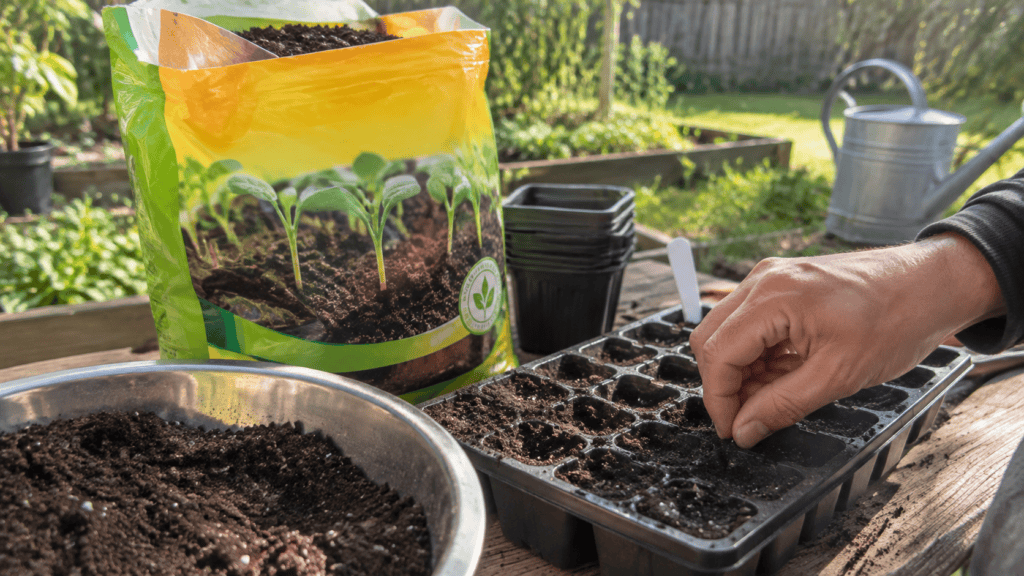
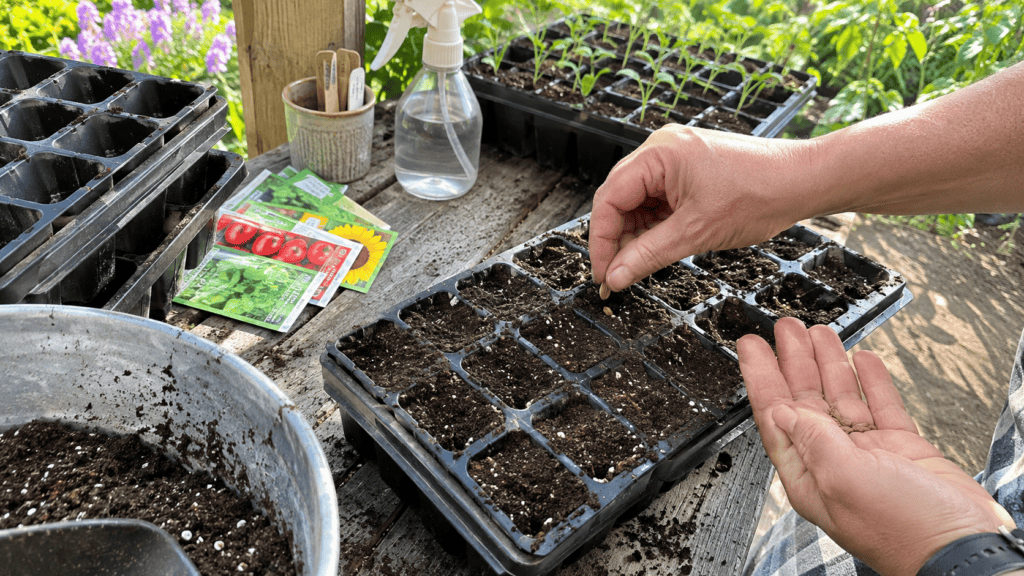
Do not start vegetable seeds in heavy garden soil. Use a fine, clean seed-starting medium with good drainage.
Our seed starting mix guide compares practical mixes, and our seed starting tray guide covers reusable cell trays and kits.
Light Is the Most Important Setup After Germination
Natural window light is often not enough for sturdy seedlings. University of Maryland Extension recommends keeping fluorescent or LED fixtures roughly 2 to 6 inches above seedlings and providing about 14 to 16 hours of light daily.
University of Minnesota Extension similarly notes that insufficient light is the major cause of long, skinny seedling stems.
As soon as seedlings emerge, remove any humidity dome and move them under strong light. Adjust the fixture upward as plants grow.
Heat for Germination, Cooler Conditions After Sprouting
Many warm-season seeds germinate faster in warm media. A seedling heat mat can help, especially for peppers and eggplants.
But after germination, constantly warm conditions can encourage soft, stretched growth. Maryland recommends somewhat cooler conditions after emergence—roughly 55–60°F at night and 65–70°F during the day for many vegetable seedlings.
Do Not Start Tomatoes Too Early
Tomatoes grow quickly indoors. Starting them months too early often creates giant plants that are difficult to light, water, transport and transplant.
A healthy 5- to 6-week-old tomato transplant is usually more useful than a 12-week-old plant that has spent weeks becoming root-bound.
Peppers and Eggplants Need More Time
Peppers and eggplants develop more slowly, so an 8- to 10-week lead is common. Warm germination temperatures and strong light after emergence are especially helpful.
Do not confuse slow germination with failure too quickly. Pepper seed can take longer than tomatoes, especially in cool media.
Brassicas: Broccoli, Cabbage and Cauliflower
These cool-season crops often need about 4 to 6 weeks indoors. Because they can be planted outside earlier than tender summer crops, their sowing date may not be much later than peppers even though they spend less time indoors.
Keep them in strong light so they remain compact.
Cucumbers, Squash and Melons
These crops grow fast and do not benefit from a long indoor period. Three to five weeks is often enough.
Start them in individual cells or containers so roots are disturbed as little as possible when transplanting.
Harden Off Before Transplanting
Seedlings grown indoors are not ready for full outdoor sun and wind immediately. Harden them off gradually over about a week or more.
- Begin in a sheltered spot with bright shade.
- Increase outdoor exposure a little each day.
- Introduce direct sun gradually.
- Protect from strong wind and unexpected cold.
- Bring tender plants inside if frost threatens.
What If You Started Too Early?
If seedlings are getting too large:
- Give them stronger light.
- Keep temperatures appropriate rather than excessively warm.
- Pot up only when roots genuinely need more room.
- Do not overfertilize to “hold” them.
- Delay transplanting until outdoor conditions are safe.
If your seedlings are already stretching, stronger light, correct temperature and better timing are the first things to check.
Should You Use a Mini Greenhouse?
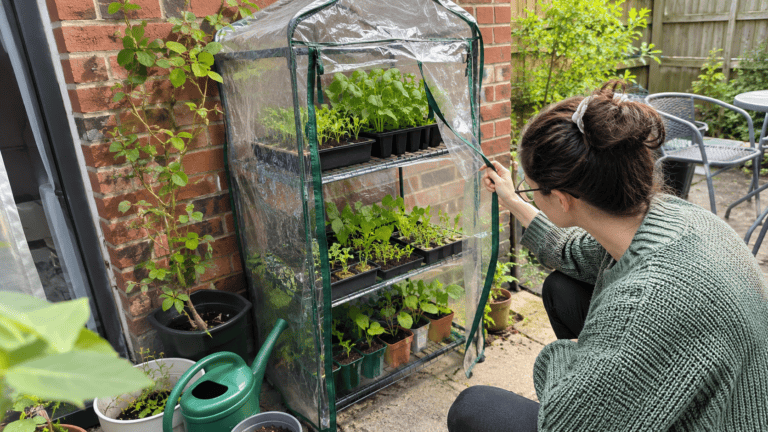
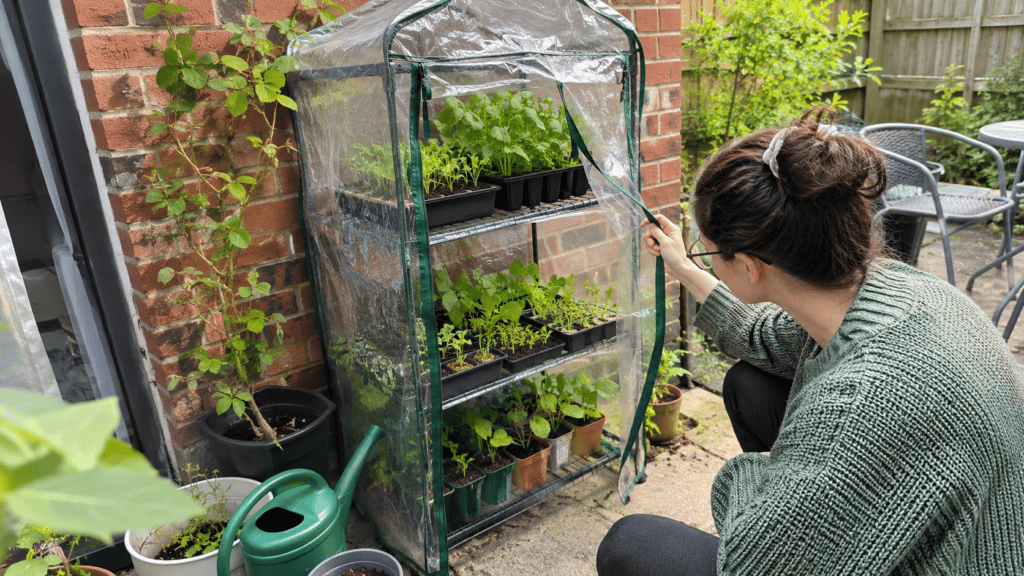
A mini greenhouse can protect trays from wind and give you useful shelving, but it does not replace proper temperature management. Small plastic-covered greenhouses can heat rapidly in direct sun, so ventilate them and monitor temperatures.
Seed-Starting Timeline by Frost Date
Instead of memorizing calendar dates, use this formula:
Transplant date minus recommended indoor growing time = sowing date.
If your frost-free planting date moves by two weeks, your indoor sowing schedule should move too.
Frequently Asked Questions
How early is too early to start seeds indoors?
If the plants will outgrow their cells long before outdoor conditions are safe, you started too early. Tomatoes are a common example.
Can I start all seeds indoors?
You can start many indoors, but some crops are easier to direct-sow because they grow quickly or dislike root disturbance.
Do seedlings need darkness?
Yes. Seedlings generally benefit from a daily dark period. Extension guidance commonly recommends about 12 to 16 hours of artificial light rather than leaving lights on continuously.
Should I use a heat mat?
It can speed germination for warm-season crops. Remove or reduce bottom heat after emergence if conditions are becoming too warm.
When should I move seedlings into a raised bed?
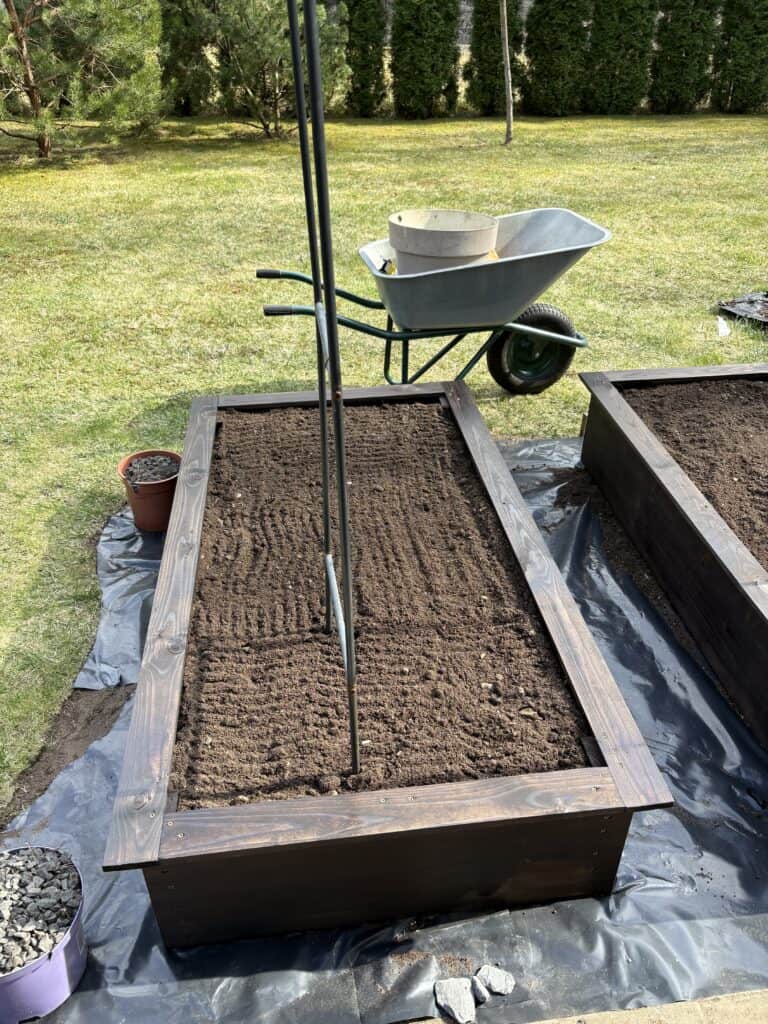
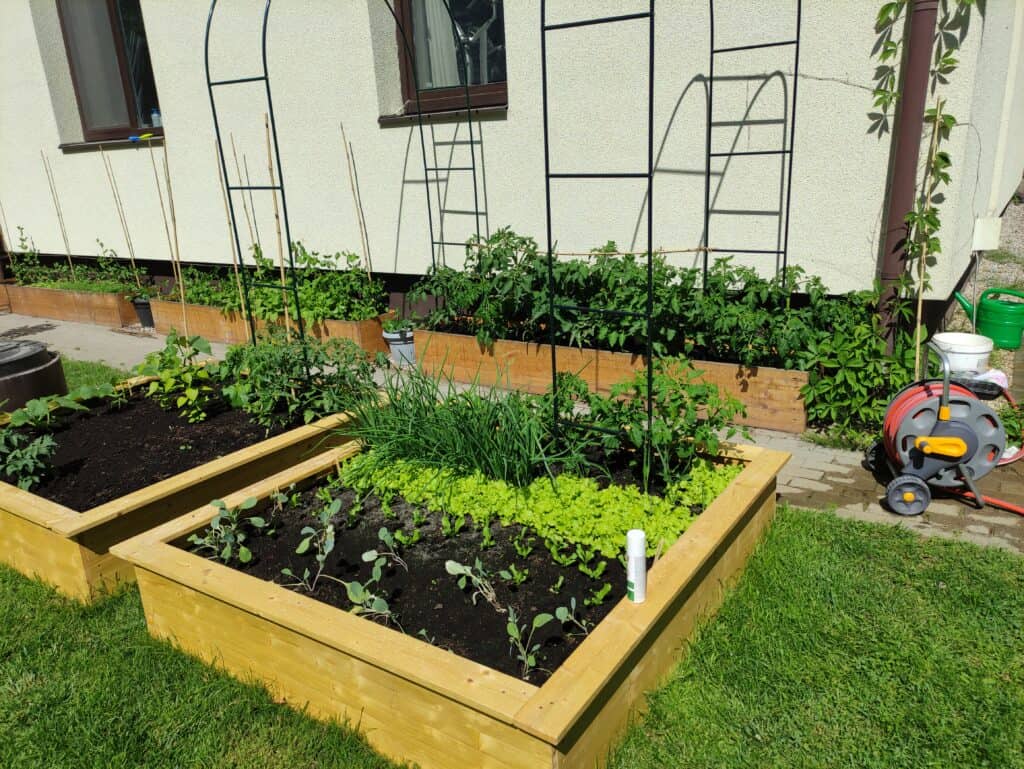
Wait until the crop can tolerate outdoor temperatures and the soil is workable. Prepare the bed first using our spring raised-bed checklist.
Bottom Line
Start with your local outdoor planting date and count backward. Peppers and eggplants need the longest indoor lead, tomatoes need roughly 5 to 6 weeks, brassicas about 4 to 6 weeks, and cucurbits only about 3 to 5 weeks. Strong light after germination matters just as much as the calendar.