Leggy seedlings have long, thin stems, wide spaces between leaves and a stretched appearance. They often lean toward a window or flop over when they get taller.
The most common cause is simple: not enough usable light. University of Minnesota Extension calls insufficient light the major cause of elongated, skinny seedling stems, while University of Maryland Extension notes that ordinary window light is seldom enough for strong vegetable transplants.
Light is not the only factor, though. Warm temperatures, crowding, starting too early and excessive fertilizer can all make weak growth worse. Here are the eight problems I would check first.
Quick Diagnosis
| Symptom | Likely cause | First fix |
|---|---|---|
| Long stems leaning toward window | Too little light | Move under overhead LED/fluorescent lights |
| Long stems even under lights | Lights too far away | Lower fixture |
| Fast, soft growth | Too warm after germination | Reduce temperature slightly |
| Crowded, tangled seedlings | Too many seedlings per cell | Thin early |
| Oversized plants before transplant date | Started too early | Use a shorter indoor schedule next time |
| Pale or weak growth | Light/nutrient/root issues | Check conditions before fertilizing |
1. Your Seedlings Do Not Have Enough Light
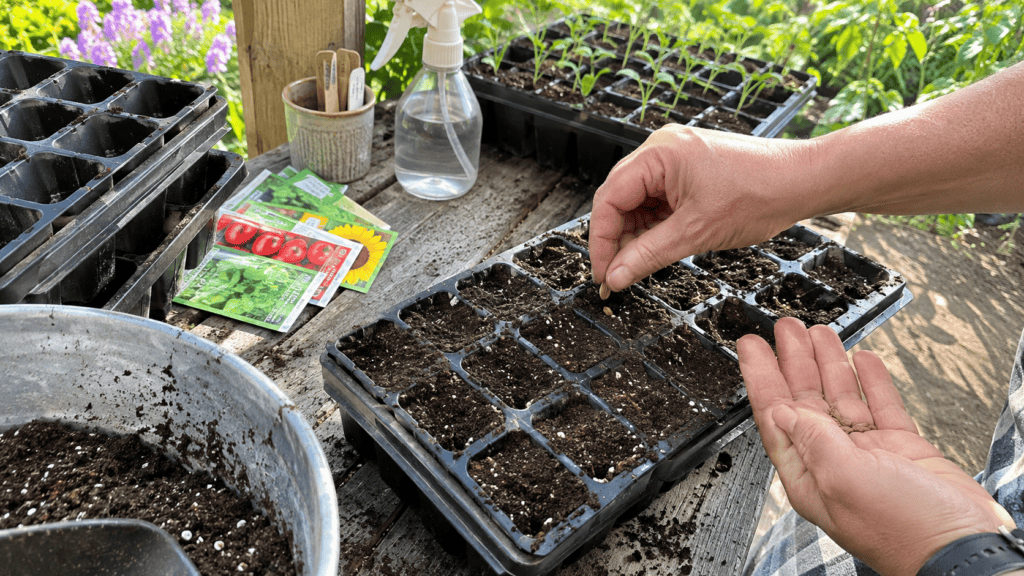
Insufficient light is the classic reason seedlings stretch. The plant lengthens its stem trying to reach a brighter source.
University of Maryland Extension says natural window light is rarely enough for strong seedlings. A south-facing sunroom can work in some homes, but ordinary windows commonly produce leaning, stretched plants.
Fix: Use LED or fluorescent lights directly over the tray. Do not rely on a lamp across the room.
2. The Grow Light Is Too Far Above the Seedlings
A light can be powerful and still fail if it is too far away. Light intensity drops quickly with distance.
Maryland recommends keeping many fluorescent and LED fixtures around 2 to 6 inches above plants. Minnesota suggests keeping seed-starting lights no more than about 4 inches above seedlings, with around 2 inches often ideal for fluorescent setups.
Different LEDs vary in intensity, so follow the fixture maker’s guidance and watch the plants. If seedlings stretch upward, the light may be too weak or too far away.
3. The Light Is On for Too Few Hours
Seedlings need a long enough daily period of good light. Extension guidance commonly recommends roughly 12 to 16 hours of artificial light each day.
A timer is one of the easiest improvements you can make. It keeps the photoperiod consistent and prevents the common problem of forgetting to turn the lights on early enough.
Do not leave lights on 24 hours a day. Plants also benefit from a dark period.
4. Temperatures Are Too Warm After Germination
Warmth speeds germination, which is why heat mats are useful for peppers, tomatoes and other warm-season crops. But constantly warm conditions after emergence can encourage fast, soft growth.
University of Maryland Extension recommends cooler conditions after germination for many vegetable seedlings, roughly 55–60°F at night and 65–70°F during the day.
Fix: Once most seeds have germinated, remove unnecessary bottom heat and move trays to a bright location with appropriate temperatures.
5. The Seedlings Are Crowded
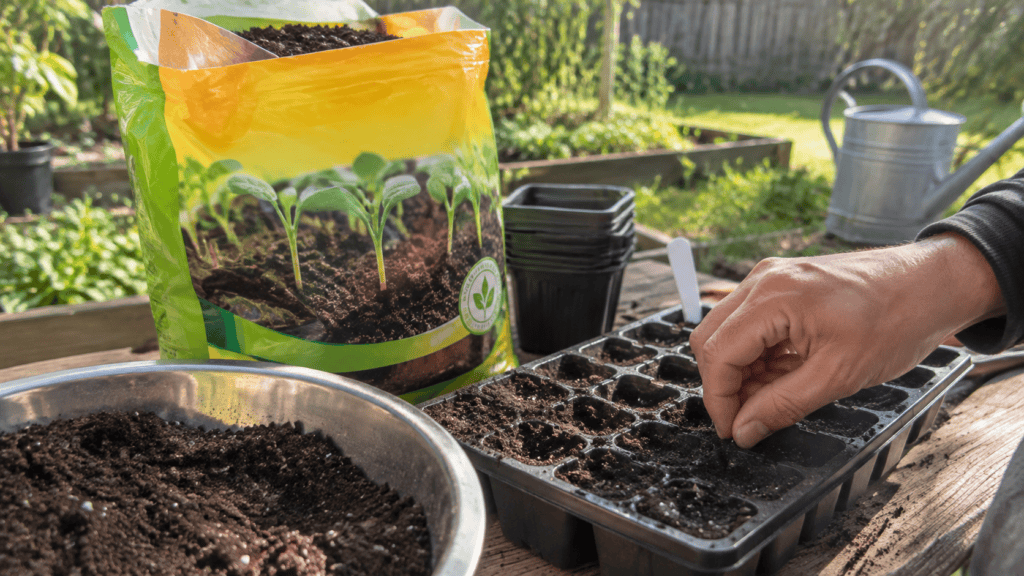
When seedlings are packed closely together, they compete for light. Each plant tries to get above its neighbors.
Crowding also reduces airflow and makes watering harder to manage.
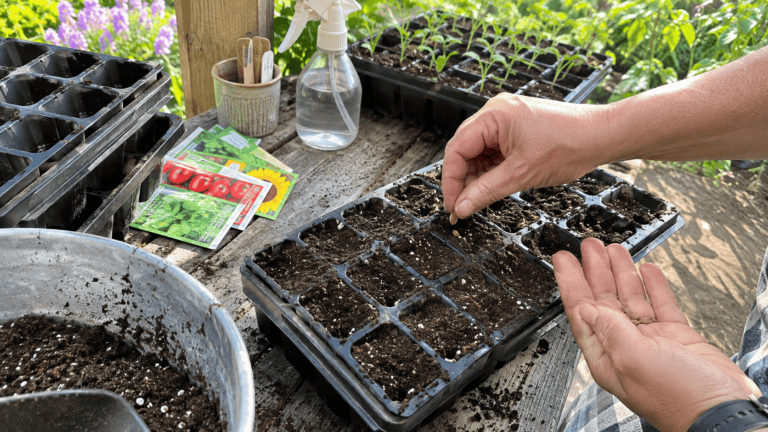
Fix: Thin seedlings according to the crop. In cell trays, keep the strongest seedling unless you intend to separate them early. Our seed-starting tray guide includes cell layouts that make thinning easier.
6. You Started the Seeds Too Early
Even a healthy seedling can become tall and awkward if it spends too many weeks indoors.
Tomatoes are the classic example. Maryland recommends roughly 5 to 6 weeks indoors for tomato transplants; peppers and eggplants usually need longer, around 8 to 10 weeks.
See our seed-starting timeline before planning your next batch.
7. Too Much Nitrogen Is Pushing Soft Growth
Seedlings need nutrients, but overfertilizing can create fast, weak growth and salt problems.
Do not react to every pale or stretched seedling with a full-strength fertilizer dose. First check light, moisture, root space and the nutrient content of your seed-starting mix.
University of Minnesota Extension recommends delaying fertilizer on very young seedlings until several true leaves have developed, then using a diluted soluble fertilizer when needed.
8. Light Comes From Only One Direction
Seedlings on a windowsill often lean toward the glass. Rotating the tray may make the lean change direction, but it does not solve the low-light problem.
Overhead lighting is better because it encourages vertical, even growth across the tray.
Can You Fix Leggy Seedlings?
Often, yes—especially when you correct the problem early.
Give them stronger light immediately
Move the tray under a suitable light and adjust the height.
Thin crowded cells
Remove weaker seedlings so the remaining plants have space and light.
Reduce unnecessary heat
Warmth is useful for germination; less warmth is often better once seedlings are up.
Improve gentle airflow
A small fan on a low setting can help strengthen stems and reduce stagnant humidity. Do not blast young seedlings with strong wind.
Pot up only when necessary
If roots have filled the cell and the outdoor planting date is still weeks away, moving the seedling to a slightly larger container may help.
Can You Bury a Leggy Seedling Deeper?
Some plants tolerate deeper planting better than others.
Tomatoes can form roots along buried stem tissue, so they can often be transplanted deeper. Do not assume every vegetable behaves the same way. Follow crop-specific guidance rather than burying all seedlings to their leaves.
Leggy vs. Damping Off
A stretched seedling is not the same as a seedling collapsing from disease.
Leggy: long, thin but usually intact stem.
Damping off: stem becomes thin, water-soaked or rotted near the soil line and the seedling collapses.
If seedlings are falling over at the base, suspect damping off rather than ordinary legginess and correct moisture, sanitation and airflow immediately.
Best Setup for Compact Seedlings
- Clean seed-starting mix
- Drainage holes in every cell
- Strong overhead light for about 14–16 hours
- Fixture kept close enough for adequate intensity
- Appropriate temperature after germination
- Even moisture, not constantly soggy soil
- Enough spacing and airflow
What About a Mini Greenhouse?
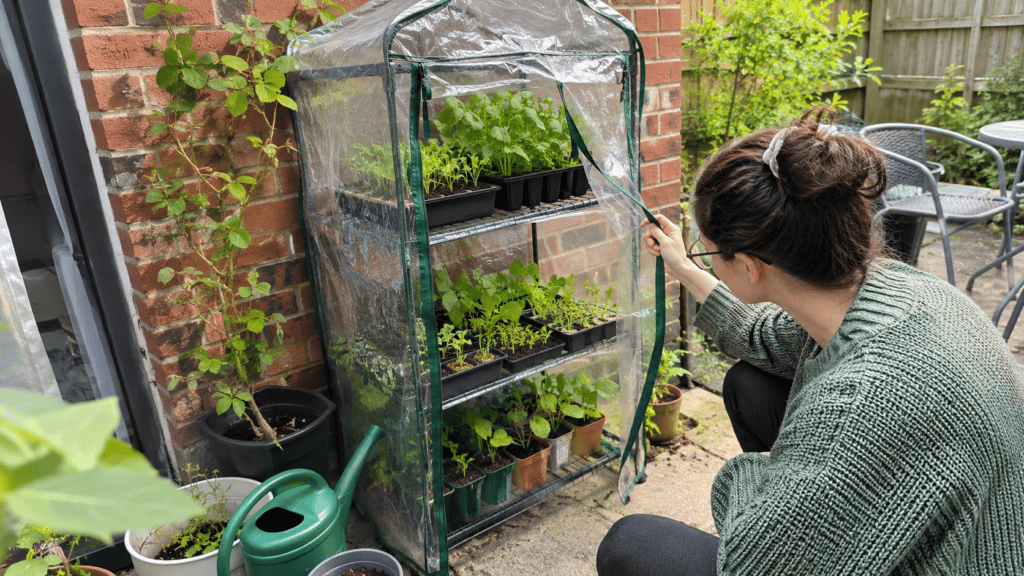
A mini greenhouse can organize trays and protect young plants, but light and heat still need active management. A plastic cover in direct sun can become very warm quickly, which may worsen stretching if light is inadequate.
Frequently Asked Questions
Are leggy seedlings ruined?
Not necessarily. Mildly stretched seedlings often recover when given stronger light and better conditions.
Should I pinch the top off a leggy seedling?
Not as a general fix. Pinching depends on the species and growth stage. Fix the environmental cause first.
Will a fan stop legginess?
A fan helps stem strength and airflow, but it cannot replace adequate light.
Why are my tomato seedlings tall and thin?
Most often they need stronger light, closer lights, cooler post-germination temperatures or less indoor growing time.
How close should grow lights be?
Many extension guides suggest fluorescent/LED fixtures only a few inches above seedlings. Follow the specific fixture’s instructions because modern LEDs vary greatly in output.
Bottom Line
If seedlings are long and thin, check light first. Put them under strong overhead light, keep the fixture appropriately close, give them a normal dark period, reduce unnecessary heat after germination, thin crowded trays and avoid starting crops too early.