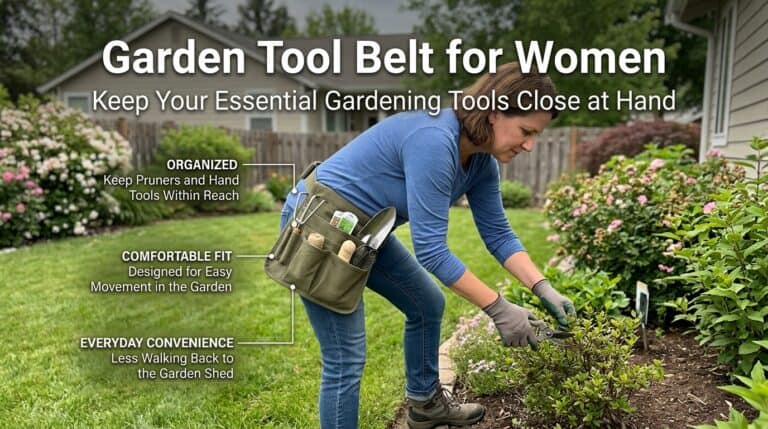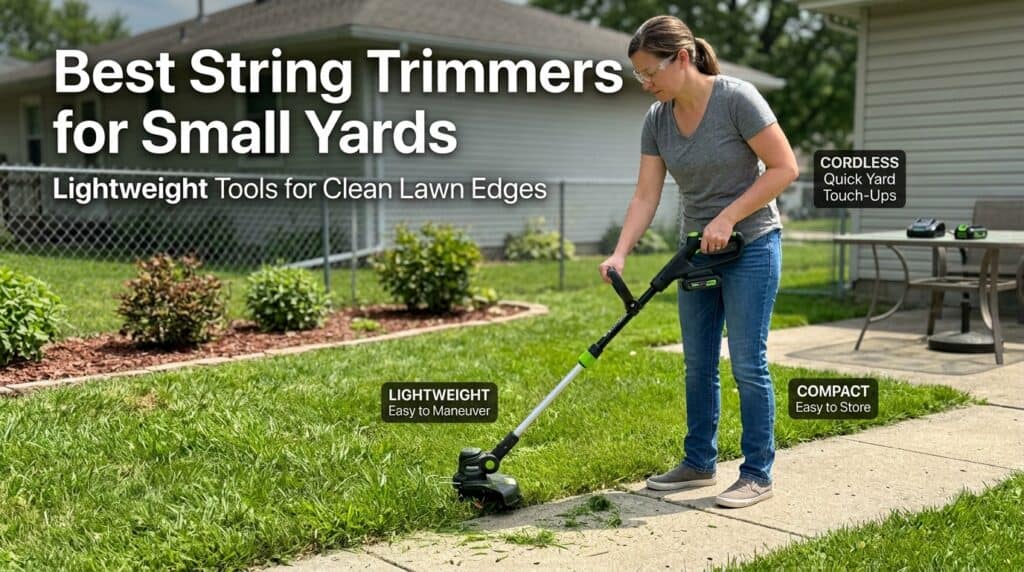
A small yard doesn’t need a heavy-duty gas trimmer to keep the edges clean. What actually matters at this scale is cutting swath, weight and balance for one-handed edging work along walkways and flower beds, and whether you already own a battery platform worth building on instead of starting a new one from scratch.
This roundup covers 11 cordless string trimmers with cutting swaths from 12 to 16 inches, spanning budget-friendly generic brands up through pro-grade ecosystems like DEWALT, Milwaukee, Bosch, and Makita. We’ve grouped these by what they’re actually good for instead of picking one overall winner, because the right trimmer here depends heavily on your yard size and what batteries you might already own.
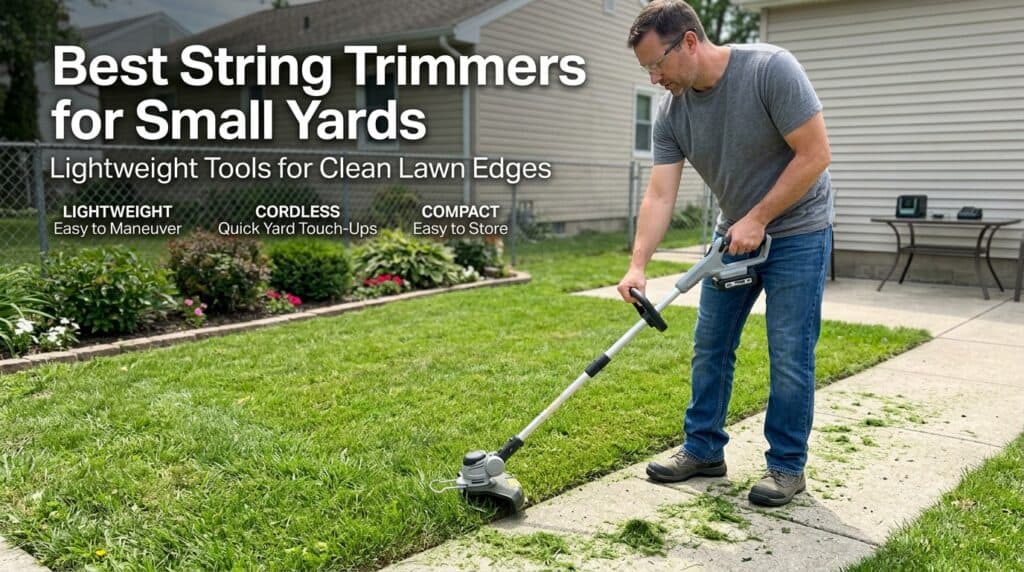
Quick Comparison
| Model | Voltage | Cutting Swath | Cutting Type | Best For |
|---|---|---|---|---|
| DEWALT DCST972X1 | 60V | 13″ | String | Best overall |
| EGO Power+ ST1511T | 56V | 15″ | String | Lightest premium feel |
| Greenworks 80V | 80V | 16″ | String | Most power / thick weeds |
| WORX WG163 | 20V | 12″ | String | Best for edging too |
| BeautFirst 12″ | 20V | 12″ | String | Best budget / two batteries included |
| BLACK+DECKER LST136 | 40V | 13″ | String | Simplest, no-fuss pick |
| CRAFTSMAN CMCST900D1 | 20V | 13″ | String | Best for first-time buyers |
| Greenworks 24V 10-Blade | 24V | 13″ | Blade disc | Best low-maintenance head |
| Milwaukee M18 Brushless | 18V | 13″ | String | Best if you own M18 batteries |
| Bosch GRT18V-40N18X | 18V | 13″ | String | Best if you own Bosch 18V batteries |
| Makita XRU23SM1 | 18V LXT | 13″ | String | Best if you own Makita LXT batteries |
1. DEWALT DCST972X1 (60V) – Best Overall

A 60V motor is more power than most small yards technically need, but that headroom is exactly why this trimmer handles a season of mixed conditions without ever feeling strained, whether that’s thin lawn edges one week or thicker weeds along a fence line after a wet spring. The 13-inch swath is wide enough to make real progress on a small-to-medium yard without the extra bulk of the 16-inch Greenworks below.
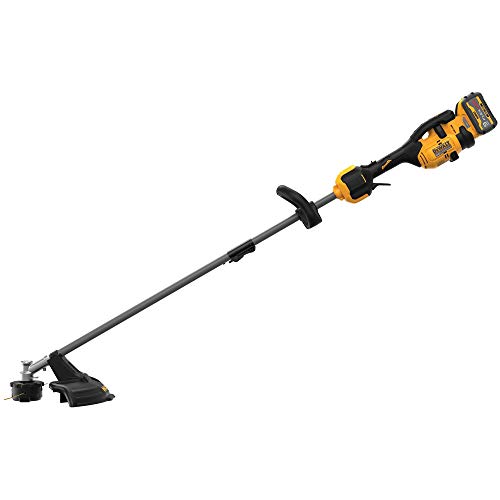
Battery and charger are included in this kit, which matters since a lot of trimmers in this power range sell as bare tools and expect you to already own a compatible pack. If you’re starting a battery platform from zero rather than adding to one you own, that included battery is worth factoring into the price comparison.
Bottom line: the balance of swath width and power headroom here is why it’s the default pick if you don’t already own a battery platform to match.
Not the right fit if: you already own batteries from Milwaukee, Bosch, or Makita – matching your existing platform (see picks 9-11 below) usually costs less than starting a new one.
Pros: Strong power headroom for mixed conditions, 13″ swath covers ground efficiently, battery and charger included.
Cons: More trimmer than a genuinely tiny yard needs. Heavier than the 20V/24V options on this list.
Buy it on Amazon today with FREE returns
2. EGO Power+ ST1511T (15″) – Lightest Premium Feel

EGO’s 56V platform has a reputation for punching above its voltage number, and the ST1511T’s 15-inch swath backs that up without the trimmer feeling front-heavy the way some wider-swath models do when you’re holding them out at arm’s length for edging work. It’s a noticeably refined feel compared to the budget picks further down this list.

Not the right fit if: price is your main constraint – this sits at a premium relative to the 20V/24V budget options here, and a small yard may not need the extra swath width to justify it.
Pros: Wide 15″ swath without excess front-heavy weight, EGO’s 56V platform has strong runtime per charge, refined build quality.
Cons: Costs more than comparable-swath trimmers on this list. Starting the EGO battery platform from scratch adds cost if you don’t already own EGO tools.
Buy it on Amazon today with FREE returns
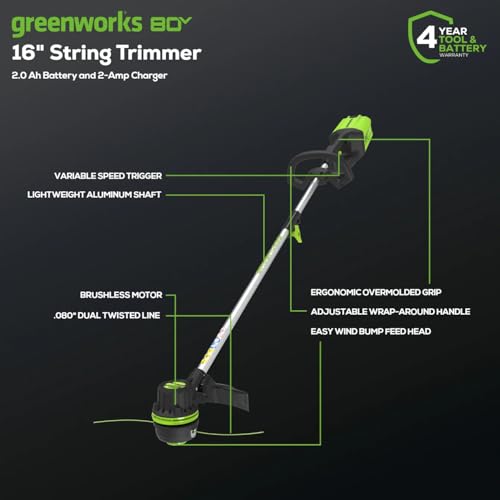
3. Greenworks 80V 16″ – Most Power / Best for Thick Weeds
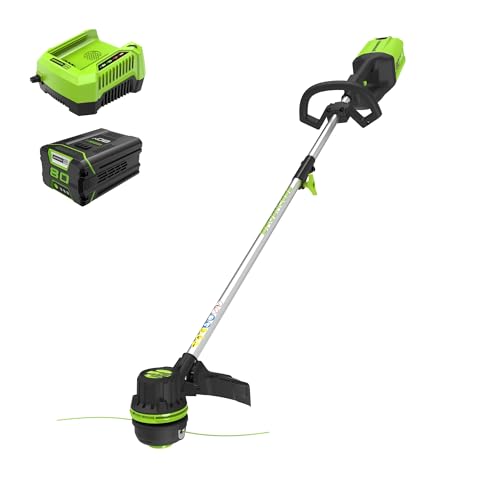
At 80V, this is the highest-voltage trimmer on this list, and the 16-inch swath is the widest here too. That combination matters most if “small yard” for you still includes a stretch of thicker weeds, tall grass along a back fence, or overgrown patches that a lower-voltage trimmer would bog down in. For a genuinely tidy, regularly-mowed small lawn, this is more trimmer than you need.
Not the right fit if: your yard is small and well-maintained rather than overgrown – the extra power and swath width here are solving a problem a tidy small yard doesn’t have.
Pros: Highest power on this list for thick weeds and overgrowth, widest 16″ swath covers ground fast, Greenworks 80V batteries cross-compatible with other Greenworks 80V tools.
Cons: Heavier and bulkier than every other trimmer here. Overkill for a small, regularly-maintained lawn.
Buy it on Amazon today with FREE returns
4. WORX WG163 (2-in-1) – Best for Edging Too

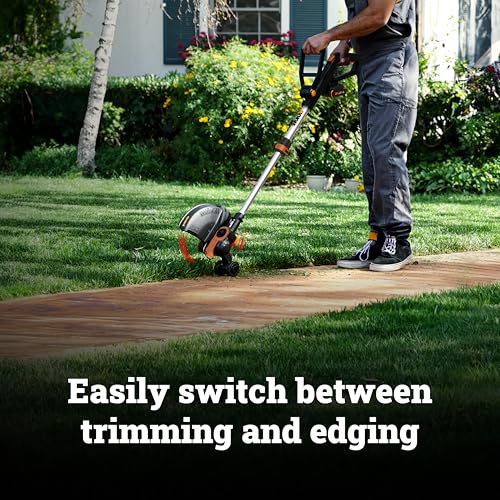
The WG163’s head rotates to convert from a horizontal trimmer to a vertical edger, which covers two tools in one for anyone whose small yard has sidewalk or driveway borders that need a crisp edge rather than just trimmed grass. It won’t out-edge a dedicated edger on a large property, but for a small yard’s borders it removes the need to own a second tool.
Not the right fit if: you already own a separate edger and just need a trimmer – the 2-in-1 conversion adds complexity you won’t use.
Pros: Converts to an edger without buying a second tool, 20V battery is lightweight for extended one-handed use, straightforward head-rotation mechanism.
Cons: 12″ swath is on the narrower end of this list. Edging performance is good but not a full substitute for a dedicated edger on larger borders.
Buy it on Amazon today with FREE returns
5. BeautFirst 12″ (2×5.0Ah Battery) – Best Budget / Best Runtime for the Price
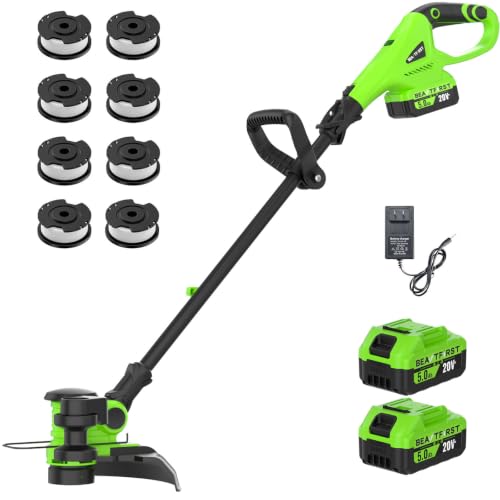
Two included 5.0Ah batteries is more onboard runtime than most trimmers at this price point offer, which matters if your small yard still has enough trim line to run through one battery and want a second charged and ready rather than waiting out a recharge. It’s a lesser-known brand than the established names on this list, which is the tradeoff for the lower price and generous battery count.

Not the right fit if: brand reputation and long-term parts availability matter more to you than upfront price – the established brands elsewhere on this list have a longer track record and wider replacement-parts support.
Pros: Two batteries included for extended runtime, lower price than name-brand 12-13″ trimmers, lightweight for one-handed edging.
Cons: Less established brand with less parts/support history. 12″ swath means more passes on anything beyond a small yard.
Buy it on Amazon today with FREE returns
6. BLACK+DECKER LST136 – Simplest, No-Fuss Pick
No products found.This is a straightforward 40V trimmer without extra conversion features or attachments to manage. If you just want to point it at grass and trim without learning a 2-in-1 mechanism or dialing in speed settings, the LST136’s simplicity is the actual selling point rather than a missing feature.
No products found.Not the right fit if: you want the edging conversion the WORX offers, or the widest possible swath – this trimmer intentionally keeps things basic.
Pros: Simple, reliable operation with no extra mechanisms to learn, established BLACK+DECKER battery ecosystem, comfortable weight for smaller users.
Cons: No edging conversion or speed settings. 13″ swath is average for this list, not a standout.
Buy it on Amazon today with FREE returns
7. CRAFTSMAN CMCST900D1 – Best for First-Time Buyers
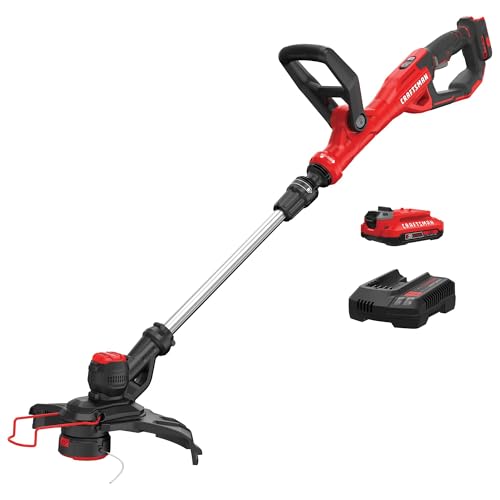
CRAFTSMAN’s V20 platform is widely available with a long history of parts and accessory support, which takes some of the risk out of a first cordless trimmer purchase if you’re not sure yet whether you’ll want to expand into more V20 tools later. The trimmer itself is competent and unremarkable in the best way: nothing to troubleshoot, nothing unusual to learn.
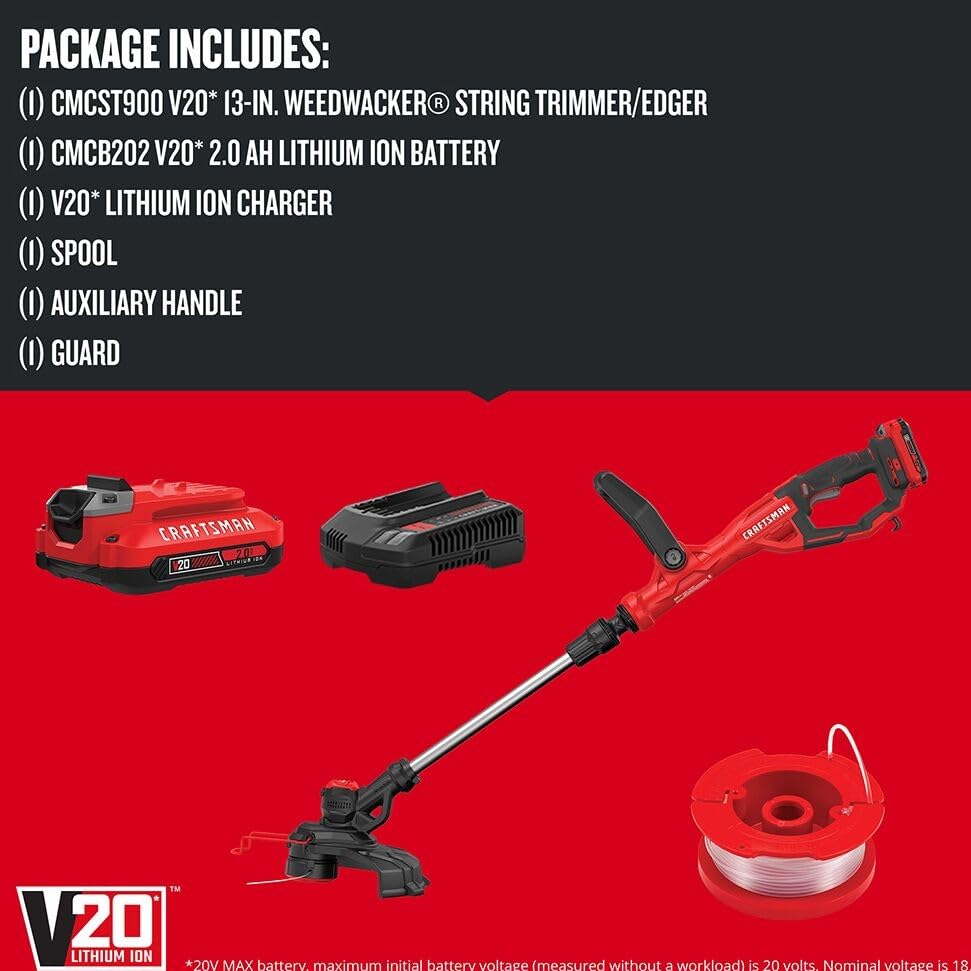
Not the right fit if: you want the widest swath or the most power on this list – this is a solid, safe middle-of-the-road pick rather than a standout in either direction.
Pros: Well-established V20 battery platform with long support history, straightforward operation for first-time cordless trimmer buyers, reasonable price for the brand recognition.
Cons: Doesn’t stand out on power or swath compared to the rest of this list. No edging conversion.
Buy it on Amazon today with FREE returns
8. Greenworks 24V 13″ (10-Blade) – Best Low-Maintenance Cutting Head
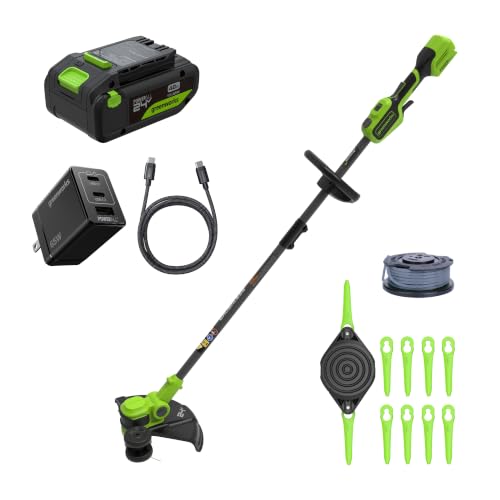
Every other trimmer on this list uses spooled string line that eventually runs out, tangles, or needs re-feeding mid-job. This Greenworks uses a fixed 10-blade plastic disc instead, which never needs re-spooling and won’t snap mid-cut the way string sometimes does on thicker stems. The tradeoff is precision: a rigid blade disc can’t get into the same tight corners around flower beds and thin gaps that flexible string line reaches.
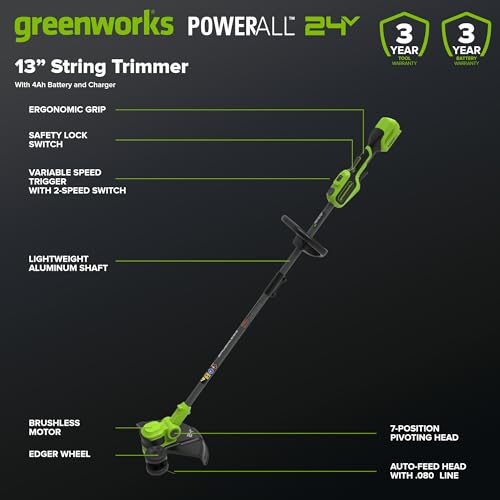
Not the right fit if: your yard has a lot of tight edges around flower beds, mulch borders, or obstacles where flexible string line reaches better than a rigid blade disc.
Pros: No string to re-spool or replace, 10-blade disc handles thicker stems without snapping, lightweight 24V platform.
Cons: Less precise around tight corners and obstacles than string-based trimmers. Blade discs eventually wear and need replacement, just less often than string.
Buy it on Amazon today with FREE returns
9. Milwaukee M18 Brushless Kit – Best If You Already Own M18 Batteries
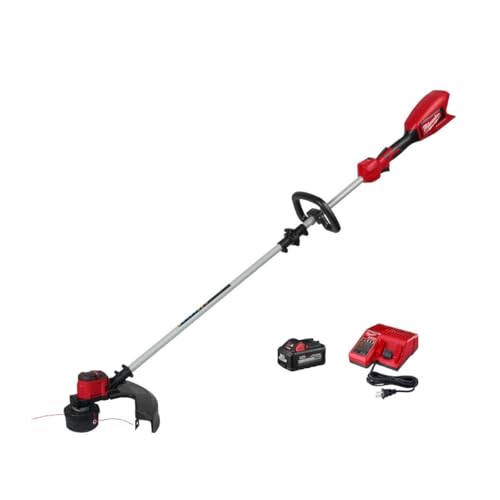
If you already own Milwaukee M18 batteries from drills, saws, or other tools, this trimmer runs on the same packs you already have charged in the garage. That’s a real cost savings over buying a separate battery platform just for yard tools, and the brushless motor is generally more durable and efficient over time than a brushed equivalent.
Not the right fit if: you don’t already own M18 batteries – buying into this platform from zero costs more than a bare trimmer price suggests, since M18 batteries and chargers are usually sold separately from the tool itself.
Pros: Runs on batteries you may already own if you have other M18 tools, brushless motor for durability, well-regarded build quality.
Cons: Starting the M18 platform from scratch for this alone is expensive. Kit configurations vary on whether a battery is included, so check before buying.
Buy it on Amazon today with FREE returns
10. Bosch GRT18V-40N18X – Best If You Already Own Bosch 18V Batteries
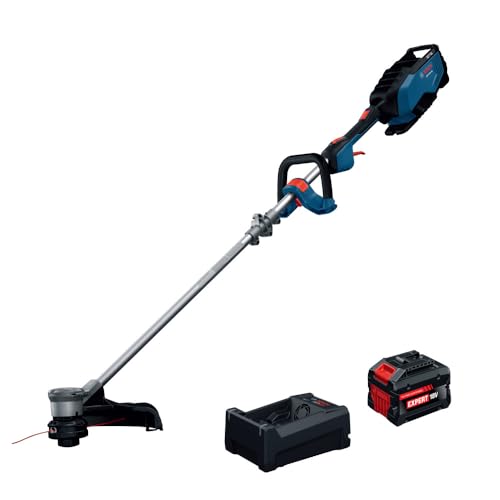
Same logic as the Milwaukee pick above, but for Bosch’s 18V platform. If you’ve already got Bosch batteries from drills or other tools, this trimmer slots in without a separate battery purchase. Bosch’s 18V ecosystem is more common in tool boxes that lean toward the brand’s drills, drivers, and rotary tools than pure yard-equipment shoppers.
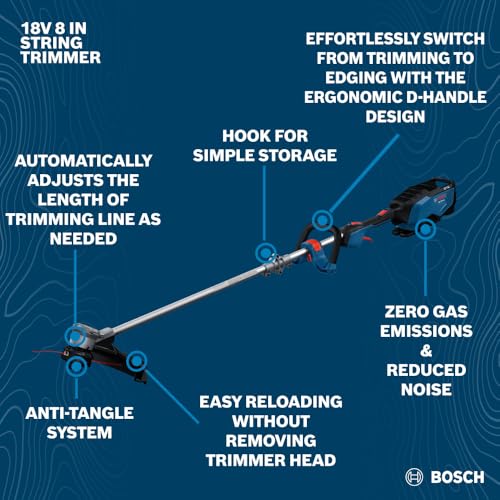
Not the right fit if: you’re not already invested in Bosch 18V tools – there’s no strong reason to start a new battery platform with this specific trimmer over the more yard-equipment-focused brands on this list.
Pros: Runs on existing Bosch 18V batteries, solid build quality consistent with Bosch’s tool reputation, straightforward operation.
Cons: Less common as a standalone yard-tool platform than Milwaukee or Makita. Buying into the platform cold isn’t the best value here.
Buy it on Amazon today with FREE returns
11. Makita XRU23SM1 (18V LXT) – Best If You Already Own Makita LXT Batteries
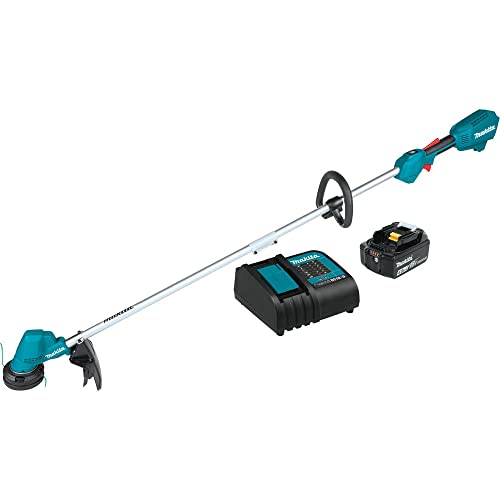
Makita’s LXT platform is one of the largest cordless tool ecosystems on the market, so there’s a reasonable chance you already own an LXT battery if you’ve bought Makita tools before. The XRU23SM1 taps into that directly, and Makita’s brushless motors have a strong reputation for runtime efficiency on a single charge.
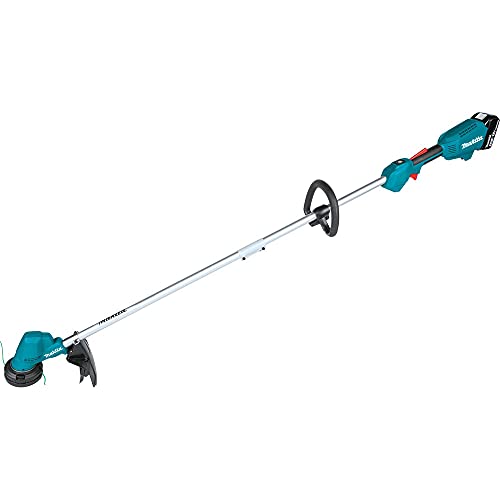
Not the right fit if: you don’t already own LXT batteries – like the Milwaukee and Bosch picks, the value proposition here depends entirely on already being in the ecosystem.
Pros: Taps into one of the largest cordless battery ecosystems available, brushless motor for efficient runtime, well-regarded build quality.
Cons: Not worth starting the LXT platform from scratch just for this trimmer. Kit configurations vary on battery inclusion.
Buy it on Amazon today with FREE returns
String vs. Blade Cutting Heads
Ten of the eleven trimmers here use spooled string line, which is the standard setup for a reason: it’s flexible enough to get into tight corners around flower beds, mailbox posts, and mulch borders that a rigid blade can’t reach cleanly. The tradeoff is that string wears down, snaps on thicker stems, and needs periodic feeding or replacement, whether that’s a bump-feed mechanism you tap on the ground or an auto-feed system that advances line automatically.
The Greenworks 24V 10-blade model takes the opposite approach: a fixed plastic blade disc that never needs re-spooling and handles thicker stems without snapping the way string sometimes does. The cost is precision. A rigid disc can’t flex around a tight corner or a delicate flower bed edge the way string line does, so it’s better suited to open lawn areas than yards with a lot of obstacles and borders to navigate around.
Buying Guide
Cutting Swath Width
12″ suits genuinely small or narrow yards where maneuverability around obstacles matters more than covering ground fast. 13″ is the most common swath on this list and handles most small-to-medium yards efficiently. 15-16″, like the EGO and Greenworks 80V, only pays off if your “small yard” still includes open stretches of grass or overgrown areas wide enough to benefit from the extra pass width.
Voltage and Runtime
Voltage alone doesn’t tell the whole story. A 20V trimmer with a 12″ swath and a 60V trimmer with a 13″ swath are both reasonable choices for a small yard; the higher voltage mainly shows up as more torque against thick weeds and stems rather than as a dramatically longer runtime. If your small yard is genuinely just lawn edges and thin grass, a lower-voltage trimmer isn’t underpowered for the job.
Matching an Existing Battery Platform
If you already own cordless tools from Milwaukee, Bosch, Makita, DEWALT, or another major brand, buying a trimmer on that same platform usually costs less overall than starting a separate battery ecosystem just for yard equipment, since you’re not paying for a battery and charger you don’t need. This is the main reason to consider the Milwaukee, Bosch, or Makita picks on this list over an otherwise comparable trimmer from a brand you don’t already own tools from. The same logic applies to cordless chainsaws if you’re shopping for both at once.
String Trimmer vs. Edger
A dedicated edger cuts a clean vertical line along a sidewalk or driveway border; a standard string trimmer cuts horizontally and can approximate an edge but won’t match a dedicated edger’s precision on a long, straight border. A 2-in-1 model like the WORX WG163 covers both jobs reasonably well for a small yard’s borders without owning two separate tools, but if your borders are long and you want a genuinely crisp edge, a dedicated edger still does that specific job better.
Line Feed Mechanism
Bump-feed systems require tapping the trimmer head on the ground to advance the line manually, which works fine but interrupts your rhythm mid-trim. Auto-feed systems advance the line automatically as it wears down, which is more convenient over a season of regular use but can occasionally over-feed and waste line if not calibrated well. Check which mechanism a specific trimmer uses if this is a feature that matters to you, since it varies model to model even within the same brand’s lineup.
Frequently Asked Questions
What cutting swath do I need for a small yard?
12-13″ covers most small-to-medium yards efficiently without excess bulk. Only step up to 15-16″ if your yard has open stretches of grass or overgrown areas wide enough to benefit from the extra pass width.
Can a string trimmer replace a lawn edger?
A 2-in-1 model like the WORX WG163 gets close for a small yard’s borders, but a dedicated edger still cuts a cleaner, more precise vertical line along a long, straight border than a trimmer’s rotating head can match.
How often do you need to replace trimmer line?
This depends heavily on how much you use it and what you’re cutting, but expect to replace or re-spool line more often if you’re regularly hitting thicker weeds, fence lines, or hard edges like concrete, since those wear the line down faster than trimming thin grass.
Is a higher voltage always better?
No. Higher voltage mainly adds torque against thick weeds and stems, not necessarily longer runtime or better precision. A lower-voltage trimmer with a swath width that matches your yard is often the better choice than an oversized, higher-voltage trimmer for a genuinely small, well-maintained lawn.
Do trimmer line and blade attachments fit other brands?
Generally no. Trimmer heads, line spools, and blade discs are usually brand- and model-specific, so check compatibility with your exact trimmer model before buying replacement line or attachments rather than assuming universal fit.
Bottom Line
If you don’t already own a cordless battery platform, the DEWALT DCST972X1 is the strongest all-around pick. If you already own Milwaukee, Bosch, or Makita batteries, the matching trimmer among the Milwaukee M18, Bosch GRT18V-40N18X, or Makita XRU23SM1 will save you the cost of a second battery ecosystem. Budget-first buyers should look at the BeautFirst 12″, and anyone tired of dealing with string line should consider the Greenworks 24V 10-blade instead. If your yard’s borders need real edging, not just trimming, the WORX WG163 covers both jobs in one tool.
If you’re rounding out your yard equipment, our cordless chainsaw guide covers the same battery-platform-matching logic for bigger cutting jobs, and our lawn mower roundup covers the mowing side.