A soaker hose may need to run anywhere from a short session to an hour or more depending on the hose, water pressure, soil and layout. That wide range is exactly why a fixed number of minutes is unreliable.
The best method is to calibrate your own system by checking how deeply the soil becomes moist.
Quick Answer
Start with a test run of about 20 to 30 minutes, then check the soil below the hose. If only the surface is wet, run longer next time. If the root zone is thoroughly moist, you have a useful baseline.
Colorado State University Extension notes that some half-inch soaker hoses with restrictive flow may need around an hour, while systems with a proper pressure regulator may adequately water some beds in 10 to 20 minutes. The correct time depends on the actual setup.
Why There Is No Universal Run Time
- Different hoses release different amounts of water.
- Pressure changes flow.
- Long hoses become less uniform.
- Sandy soil absorbs and drains differently from clay.
- Mulch reduces evaporation.
- Hot weather increases plant demand.
- Large fruiting plants use more water than seedlings.
Calibrate Your Soaker Hose in 5 Steps
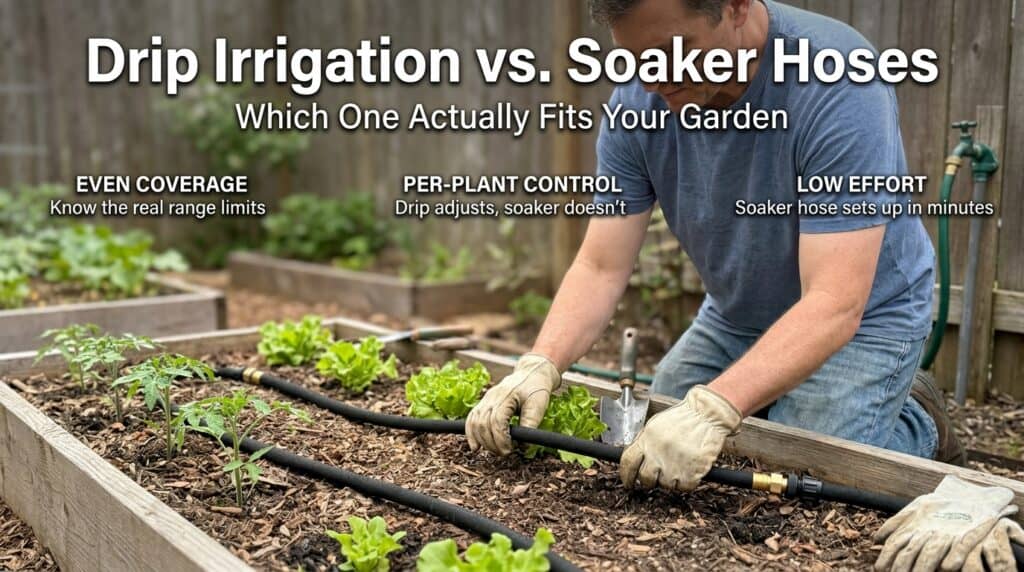
- Begin when the soil actually needs water.
- Run the hose for a known time, such as 20 or 30 minutes.
- Turn it off and wait 10 to 20 minutes for water to redistribute.
- Use a trowel to check moisture depth in several spots.
- Increase or reduce the next run time based on what you find.
Your goal is a moist root zone, not a soaked surface.
How Deep Should the Water Reach?
For established vegetables, try to wet several inches of the active root zone rather than only the top inch.
University of Minnesota Extension recommends watering mature vegetable gardens deeply and checking moisture below the surface. The exact depth depends on the crop.
Measure in More Than One Place
Check near the beginning, middle and end of the hose. Traditional soaker hose can water unevenly along a long run.
If the first section is soaked while the far end stays dry, the problem may be hose length or pressure rather than insufficient total run time.
How Pressure Changes Run Time
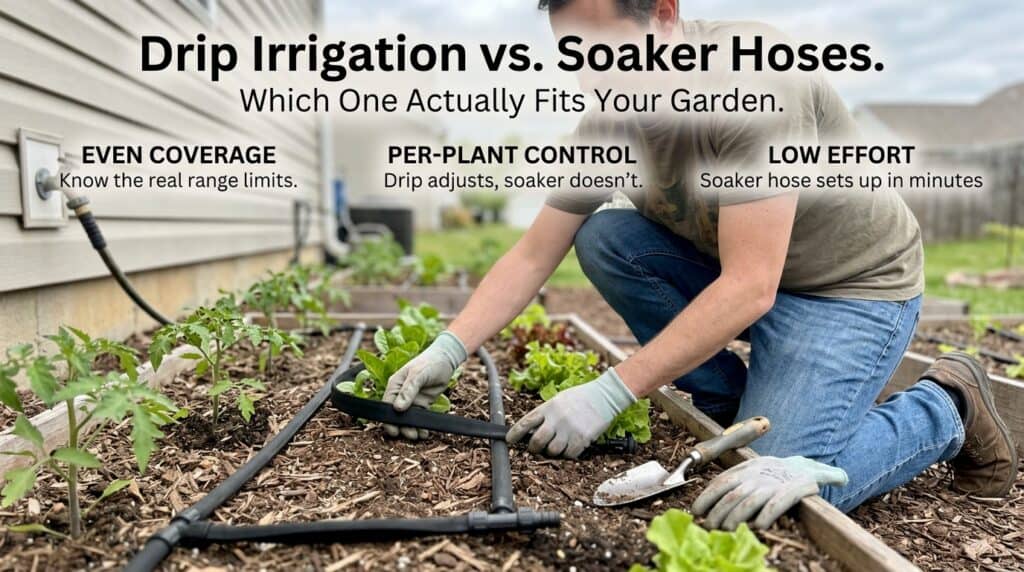
Soaker hose is designed for low pressure.
Too much pressure can create jets, leaks or rupture. Too little pressure may cause weak flow at the far end.
Use the regulator or flow restrictor recommended by the manufacturer.
Keep Runs Short for Better Uniformity
Colorado State Extension recommends keeping traditional soaker hose lines relatively short—often around 25 feet—to improve even delivery.
If you need to cover a large garden, use multiple shorter zones rather than one extremely long snake.
How Often Should You Run It?
Run time and frequency are separate questions.
A long deep watering once or twice a week may work in moisture-retentive soil, while sandy soil may need shorter, more frequent sessions.
Always check the soil before turning the system on again. See how to tell if your garden needs water.
Raised Beds
Raised beds often dry faster than in-ground gardens. Check them more frequently in hot and windy weather.
Our raised-bed watering guide covers this in more detail.
What About Mulch?
Mulch reduces evaporation, so a mulched bed may need water less often even if each individual watering session is similar.
Place the soaker hose under the mulch so water reaches soil directly.
Use a Moisture Meter if You Are Unsure
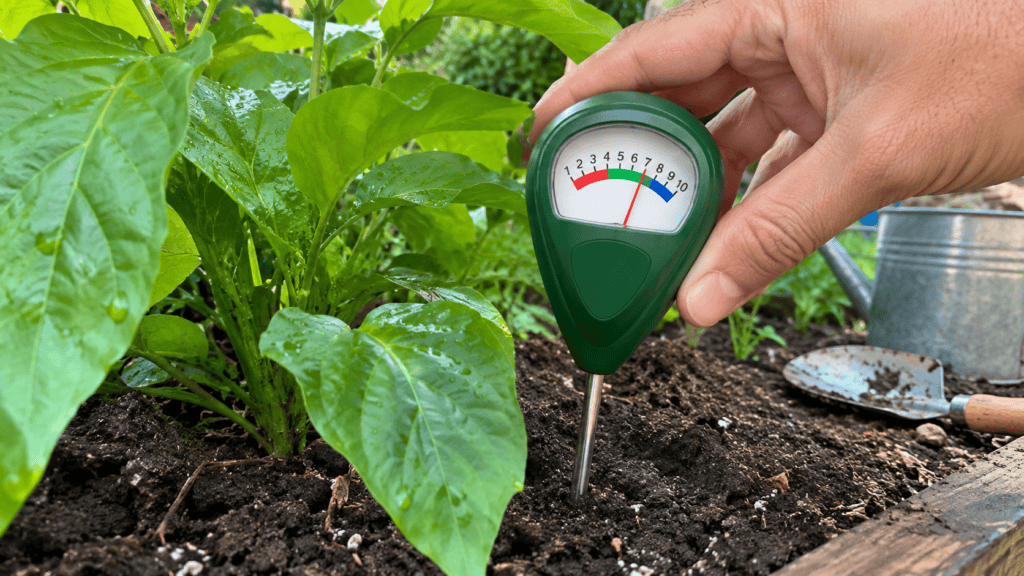
A soil moisture meter can help when you are calibrating a new bed, but take readings in several locations.
Physical inspection with a trowel is still useful because it shows how wide and deep the wet zone actually is.
How Long for Tomatoes?
Do not choose a fixed tomato run time. Large fruiting tomato plants use much more water than small transplants.
Calibrate the hose to wet the tomato root zone, then increase frequency during hot, dry weather as needed.
How Long for a New Vegetable Bed?
Newly planted seeds need more consistent surface moisture than established plants.
A soaker hose may not spread moisture evenly enough across the surface for very small seeds unless lines are closely spaced. Check the whole seed row.
Signs You Are Running It Too Long
- Water puddles or runs out of the bed.
- Soil remains saturated for days.
- Plants wilt while soil stays soggy.
- Algae or moss grows persistently on the surface.
- Water drains continuously from containers or hard-surface beds.
Signs You Need a Longer Run
- Only the top inch is damp.
- Soil between hose runs stays dry.
- Plants wilt by morning.
- The far end of the hose receives little water.
Make a Simple Baseline
Once you calibrate your setup, write down the time that wets the root zone under normal conditions.
Then adjust frequency—not blindly the run time—according to weather and plant demand.
Frequently Asked Questions
Is 30 minutes enough?
Sometimes. Test the soil afterward. Hose design and pressure make a huge difference.
Can I leave a soaker hose on overnight?
It is usually unnecessary and can waste water or saturate the bed. Use a timer if you are likely to forget it.
Should water spray from a soaker hose?
No. It should seep. Strong jets often mean too much pressure or damage.
Can I bury a soaker hose?
Some can be placed shallowly under mulch or soil. Follow manufacturer guidance.
Bottom Line
Do not choose a soaker-hose run time from a generic chart. Calibrate it by checking the root zone. Start with a measured test, inspect the soil, then adjust for your hose, pressure, soil and weather.