The best time to prune a tree or shrub depends on why you are pruning and when the plant forms its flowers. “Prune everything in winter” is too simple.
Dead, broken and hazardous branches can often be removed when they are noticed, but routine shaping and size reduction should be timed to the species. Spring-flowering shrubs can lose their flower buds if cut too early, while many deciduous trees are easiest to evaluate during dormancy.
This guide gives you a practical seasonal framework and highlights the major exceptions.
Quick Pruning Calendar
| Plant type | Typical timing | Why |
|---|---|---|
| Many deciduous trees | Late winter / dormant season | Branch structure is visible; less foliage in the way |
| Summer-flowering deciduous shrubs | Late winter to early spring | They flower on new growth |
| Spring-flowering shrubs | Immediately after flowering | They often flower on older wood |
| Many evergreen shrubs | After flowering or spring | Avoid hard pruning during severe cold |
| Cherry and plum | Often late spring/summer | Timing can reduce disease risk |
| Dead/broken branches | As needed | Safety and plant health |
These are broad rules. Check the species before making major cuts.
Late Winter: The Main Pruning Season for Many Deciduous Trees
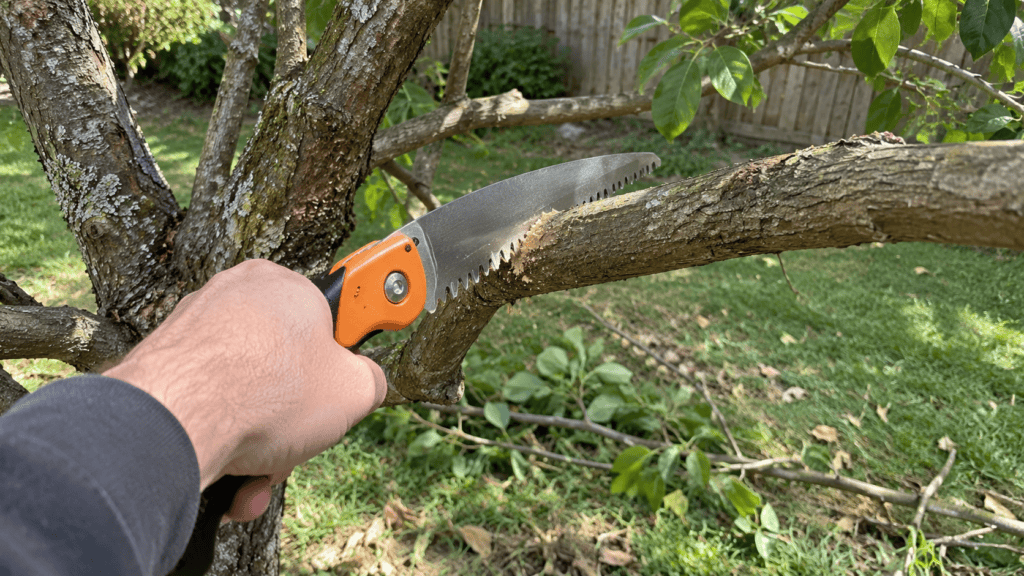
For many shade and landscape trees, late winter is a convenient time to prune. Leaves are absent, branch structure is easy to see and the plant is still dormant.
Focus on:
- dead or damaged wood;
- crossing branches;
- poorly attached competing stems;
- suckers and watersprouts where appropriate;
- structural problems in young trees.
Use the correct tool for branch size. See our pruners and loppers guide, pruning saw guide and pole saw guide.
Spring: Prune Summer-Flowering Shrubs Before New Growth Takes Off
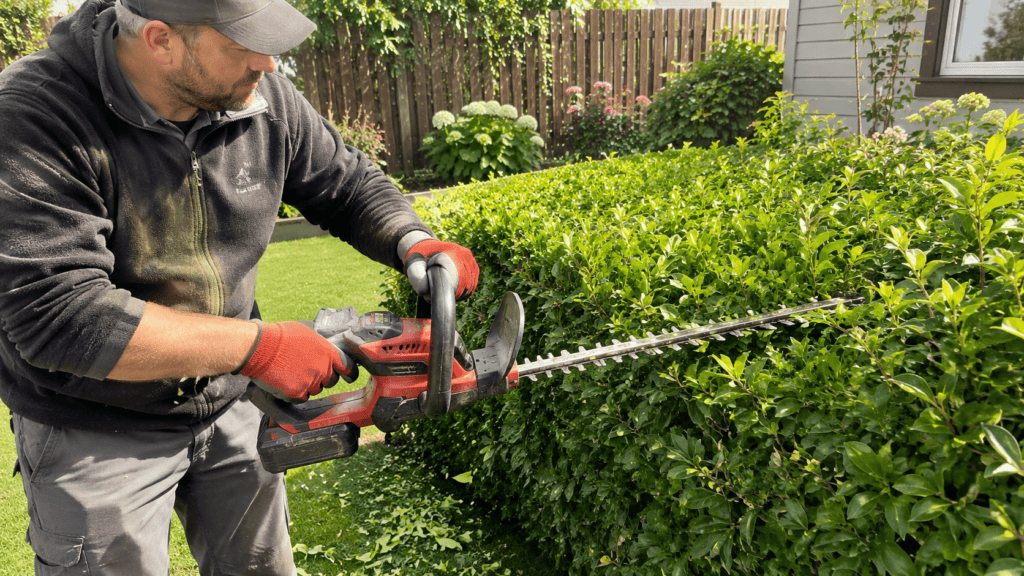
Many deciduous shrubs that flower in summer or fall bloom on the current season’s new growth. RHS guidance lists plants such as butterfly bush and hardy fuchsia among shrubs commonly pruned in spring.
Spring pruning encourages new shoots that later carry flowers.
After Flowering: Prune Spring-Flowering Shrubs
Forsythia, lilac and many other shrubs bloom from buds formed on older growth. If you prune them in late winter, you may remove the upcoming flowers.
The safer rule is to prune soon after flowering ends. That gives the shrub time to make new shoots and flower buds for the following year.
Summer: Useful for Certain Trees and Controlled Growth
Summer pruning can slow vigorous growth because you remove actively functioning leaves. It is also the preferred period for some species.
RHS notes that cherry and plum trees are commonly pruned from spring into summer to reduce the risk of silver leaf disease. Magnolias and walnuts also have species-specific timing considerations.
This is why a species-specific check matters before large cuts.
Autumn: Usually Not the Time for Heavy Routine Pruning
Autumn pruning can stimulate new growth that may not harden before cold weather. Fresh wounds may also remain exposed going into winter.
Light removal of broken or dangerous material is different, but major reshaping is often better postponed until the recommended season.
Evergreen Shrubs Need Different Timing
Evergreens retain foliage year-round and do not respond exactly like deciduous shrubs. RHS advises that many evergreen shrubs are best pruned after flowering, while renovation pruning may be done in late winter or early spring just before growth begins.
Do not cut deeply into old bare wood on conifers unless you know the species can regrow from it. Many conifers will not.
Newly Planted Trees: Prune Less Than You Think
Young trees need enough foliage to establish roots. Remove broken, dead or clearly defective branches, but avoid aggressively “shaping” a newly planted tree.
Formative pruning over the first several years can gradually develop well-spaced scaffold branches without stripping too much canopy at once.
Prune Dead and Broken Branches When Needed
Dead or storm-damaged branches are a safety issue, not a calendar issue. Remove small branches when conditions are safe.
For large limbs, branches over structures, or anything near utility lines, hire a qualified arborist.
How Much Should You Remove at Once?
Heavy pruning is stressful. On mature trees, avoid removing a large portion of the living canopy in one season unless a professional has a specific reason.
Multiple smaller pruning sessions over several years are usually better than drastic topping.
Never Top a Tree
Topping means cutting major branches back to stubs without regard to branch structure. Penn State Extension notes that topping causes long-term structural and health problems.
If a tree is too large for its location, proper reduction cuts or professional removal are safer than repeatedly topping it.
Use the Branch Collar
When removing a whole branch, make the final cut just outside the branch collar—the swollen tissue where the branch joins the trunk or larger limb.
Do not leave a long stub, and do not cut flush against the trunk.
For larger branches, use a three-cut method to prevent bark tearing: make an undercut, remove the branch weight farther out, then make the final cut just outside the branch collar.
Choose the Right Tool
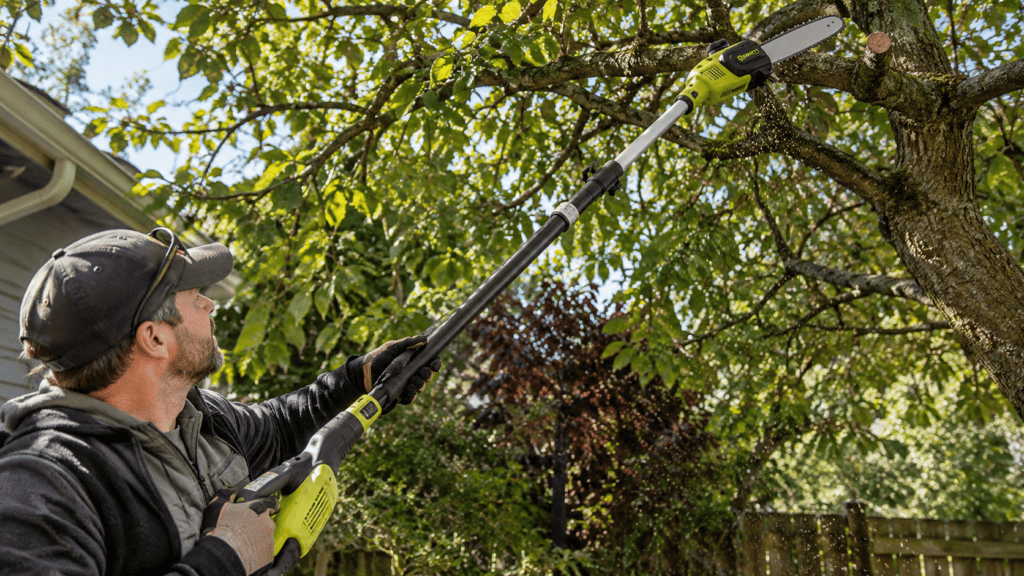
University of Minnesota Extension gives a useful practical guide:
- Hand pruners: small branches, often up to about 3/4 inch.
- Loppers: more leverage, often up to about 1 1/2 inches.
- Pruning saw: larger woody branches.
- Pole saw: branches that require extended reach, used carefully.
Choose pruners or loppers for smaller wood, a pruning saw for thicker reachable branches, and a pole saw only when reach is the limiting factor.
When Not to Prune
- Do not prune near overhead power lines.
- Avoid major work in strong wind, ice or unsafe footing.
- Do not use a chainsaw while standing on a ladder.
- Avoid removing flower buds immediately before a spring-blooming shrub flowers.
- Do not heavily prune a severely stressed tree without understanding the cause.
Season-by-Season Checklist
Winter
- Inspect deciduous branch structure.
- Prune many dormant trees.
- Remove dead or damaged branches.
- Sharpen tools before spring.
Spring
- Prune many summer-flowering shrubs.
- Wait until spring-flowering shrubs finish blooming.
- Watch for frost-damaged growth before cutting.
Summer
- Lightly control vigorous growth where appropriate.
- Prune species that are safer in summer, such as certain Prunus.
- Remove storm damage.
Autumn
- Limit routine heavy pruning.
- Remove hazardous broken branches.
- Plan winter pruning work.
Frequently Asked Questions
Is winter always the best time to prune trees?
No. It works well for many deciduous trees, but cherries, plums, magnolias and some other species have different preferred timing.
When should I prune flowering shrubs?
Spring-flowering shrubs are commonly pruned after flowering. Many shrubs that flower later on new growth are pruned in late winter or spring.
Can I prune a tree in summer?
Yes, for certain species and purposes. Summer pruning can reduce vigor and is preferred for some trees.
Should I seal pruning cuts?
Routine wound paints are generally not needed for most properly made pruning cuts. Follow species-specific disease guidance where relevant.
What if the branch is too high?
Use an appropriate pole tool only from stable ground and within safe reach. For large or dangerous branches, call an arborist.
Bottom Line
Use plant biology rather than one universal date. Many deciduous trees are pruned while dormant, spring-flowering shrubs after bloom, summer-flowering shrubs in late winter or early spring, and certain species such as cherry require special timing. When in doubt, identify the plant first.