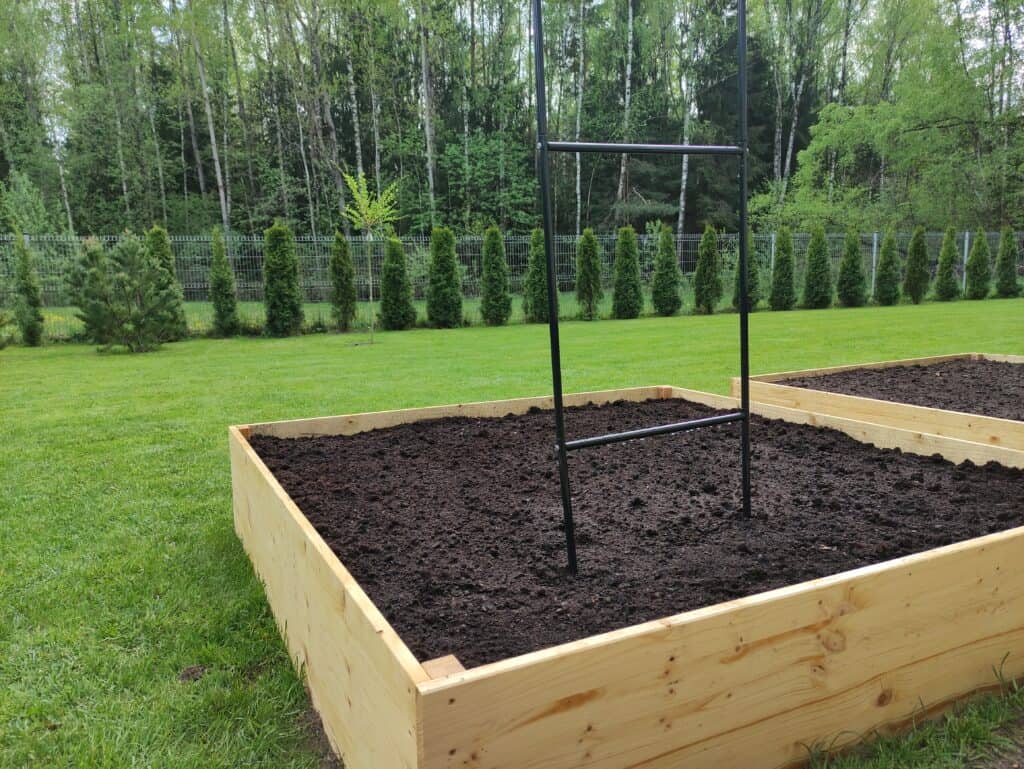
There is no honest one-number answer to how often you should water a raised garden bed. Raised beds usually dry faster than in-ground gardens, but the right schedule changes with weather, soil mix, bed depth, crop size and whether the bed sits over open soil or a hard surface.
The better rule is: water deeply enough to moisten the active root zone, then water again when that zone begins to dry—not simply because the calendar says it is watering day.
University of Minnesota Extension notes that raised beds dry out more quickly than in-ground beds and may need more frequent watering. University of Maryland Extension also points out that raised beds on pavement or concrete can dry especially quickly because roots cannot reach moisture below the bed.
Quick Answer
- Do not water by calendar alone.
- Check soil moisture 1 to 3 inches below the surface for small plants and deeper for established crops.
- Water thoroughly enough to reach the main root zone.
- Water more often during hot, windy weather and when plants are large or fruiting.
- Water less often during cool, cloudy periods.
- Use mulch to reduce evaporation once the soil has warmed.
- Check containers and shallow beds more often than deep beds over open ground.
Why Raised Beds Dry Faster
A raised bed has more exposed surface area than ordinary garden soil. The sides warm in sun and air moves around the bed, which can increase evaporation. A loose raised-bed mix also drains efficiently.
Those qualities are useful—they help prevent waterlogging and warm the soil earlier—but they mean you need to pay attention to moisture.
If you are still building your bed, the soil mix matters. See what soil to put in a raised garden bed for a practical topsoil-and-compost approach.
The Finger Test: The Simplest Way to Know When to Water
Push a finger into the soil rather than judging by the color of the surface. The top half-inch can look dry while the root zone is still moist.
For newly planted seeds and shallow-rooted seedlings, monitor the upper layer closely. For established vegetables, check deeper—roughly 2 to 3 inches is a useful quick test.
If the soil at that depth feels cool and moist, you can often wait. If it feels dry and crumbly, water.
Use a Moisture Meter as a Second Opinion
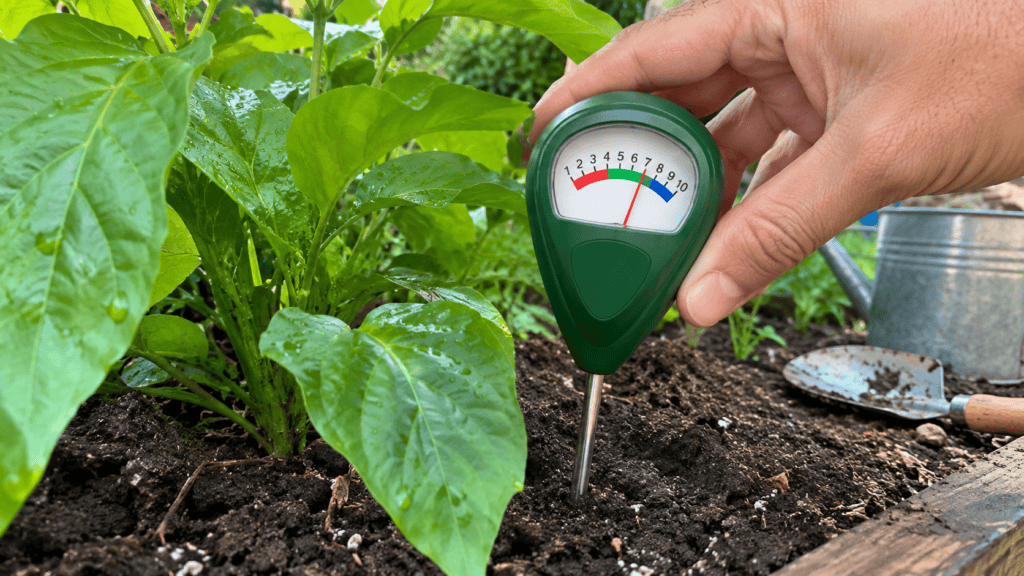
A simple meter can be useful when you are learning how quickly a new bed dries. It should not replace observation, but it can help you compare different areas in the bed.
Take readings in several spots. A meter inserted directly beside an irrigation emitter may show wet soil while the rest of the bed is dry.
Our best soil moisture meters guide compares practical models for raised beds and containers.
How Deeply Should You Water?
A quick surface sprinkle encourages shallow rooting and may leave most of the root zone dry. When established vegetables need water, apply enough that moisture moves down through the root area.
The exact depth varies by crop. Lettuce and radishes have shallower root systems than mature tomatoes, squash and peppers.
After watering, dig a small test hole away from the plant or push a trowel into the soil to see how far moisture penetrated. This one check can teach you more than guessing how many minutes your hose should run.
How Often to Water at Different Growth Stages
Just-sown seeds
The surface layer needs to stay evenly moist during germination. A hard dry crust can stop small seedlings from emerging. Use a gentle spray so seeds are not washed out.
Young seedlings and new transplants
The root system is small, so the plant cannot reach moisture stored deeper in the bed. Check daily in warm weather until roots establish.
Established leafy greens
Greens perform best with fairly even moisture. Repeated wilting can make leaves tougher and can encourage some crops to bolt.
Flowering and fruiting vegetables
Tomatoes, peppers, cucumbers and squash use much more water once plants are large. Inconsistent watering can stress plants and reduce fruit quality.
Weather Changes Everything
Hot weather
High temperature increases water loss. Deep beds may still hold moisture below the surface, so check before watering rather than assuming every hot day requires another full irrigation.
Wind
Wind can dry leaves and the soil surface surprisingly fast. Raised beds in open, windy areas may need more frequent checks than beds sheltered by a fence.
Cool, cloudy weather
Plants use less water and evaporation slows. Continuing a midsummer watering schedule into cool weather can leave the root zone too wet.
Rain
Do not assume a light shower watered the bed deeply. Check soil moisture after rain. Conversely, turn off automatic irrigation after substantial rainfall.
Morning Is Usually the Best Time to Water
Morning watering gives plants access to moisture before the hottest part of the day and allows wet foliage to dry. That is particularly helpful when overhead watering is unavoidable.
Soaker hoses and drip systems apply water near the soil, reducing leaf wetness and evaporation.
Soaker Hose vs. Hand Watering
Soaker hose
A soaker hose works well in straight or gently curved beds. It delivers water slowly along its length. Run it long enough to wet the root zone, then check the soil to learn how long your specific setup needs.
Watering can or hose wand
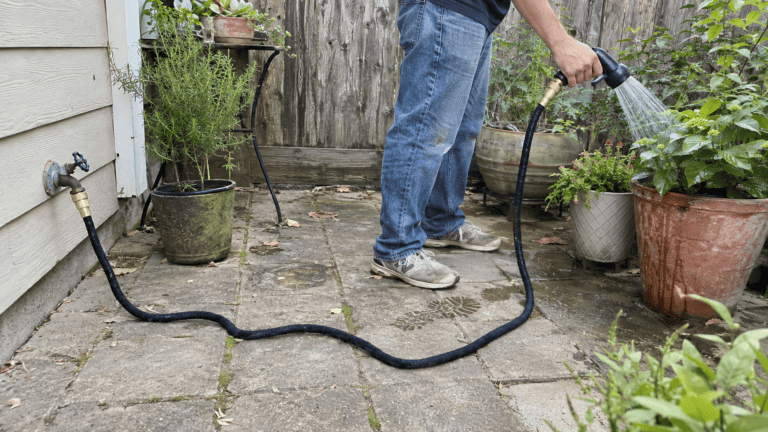
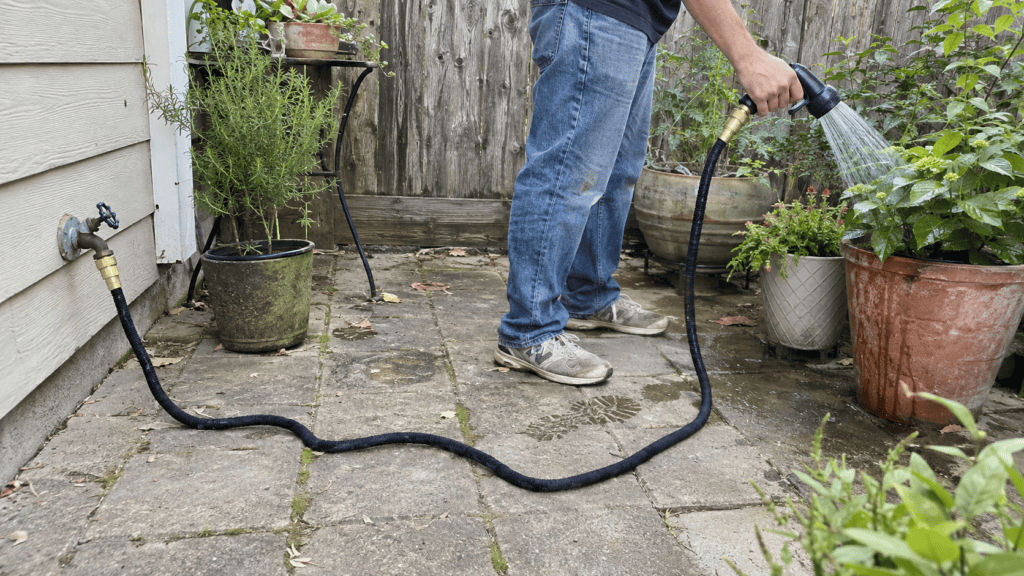
Hand watering gives you precise control around new seedlings and transplants. It is also useful when different crops share the same bed and need different amounts of water.
Sprinkler
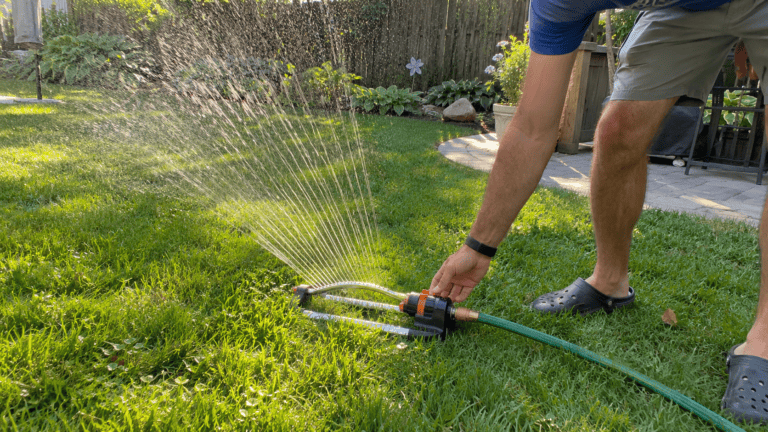
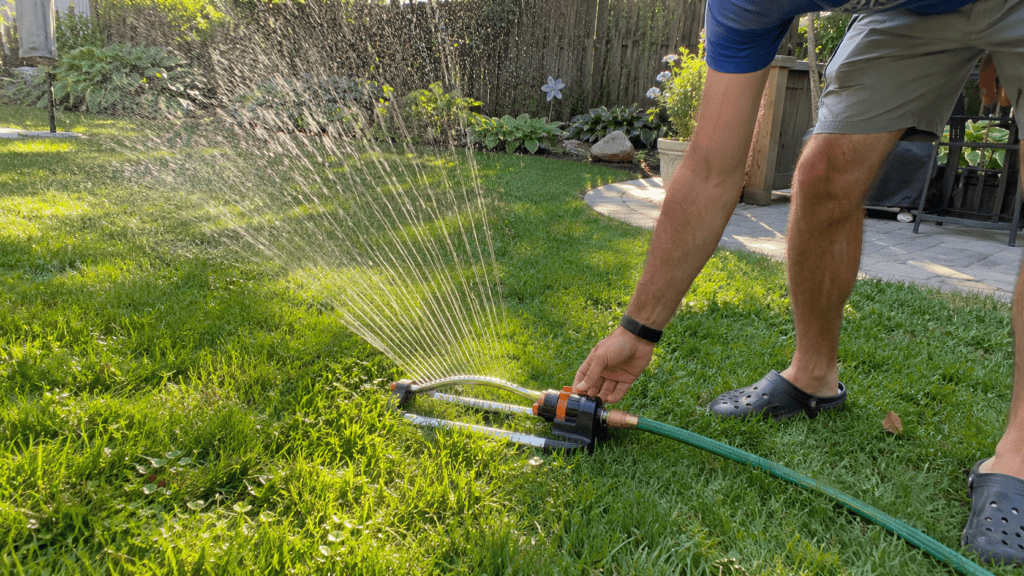
An oscillating sprinkler can cover a large area but is less efficient for a single raised bed because much of the water lands outside the root zone. See our oscillating sprinkler guide if you are watering lawn and beds together.
How Long Should You Run a Soaker Hose?
There is no universal number because flow varies by hose length, water pressure, soil type and layout. The correct way to calibrate one is simple:
- Start with dry-ish soil.
- Run the hose for a set amount of time, such as 20 or 30 minutes.
- Turn it off and wait several minutes.
- Check how deep the soil is moist in several places.
- Adjust the run time next watering.
Once you know how long your system takes to wet the root zone, you can use that as a baseline and adjust for weather.
Mulch Can Reduce Watering
A 2- to 3-inch layer of clean organic mulch can reduce evaporation and slow weeds. Straw, shredded leaves and leaf mould are common options.
Keep mulch slightly away from stems. In early spring, wait until the soil has warmed enough for the crops you are growing before applying a heavy insulating layer.
Bed Depth and Bottom Surface Matter
A shallow bed on concrete has less water reserve than a deep bed over native soil. University of Maryland Extension notes that plants in beds on impermeable surfaces are entirely dependent on the moisture within the bed itself.
That means shallow rooftop, patio and driveway beds may require much more frequent monitoring than a 16-inch-deep bed open to the ground.
How Soil Mix Changes Watering
Too sandy
Water moves through quickly and the bed may dry fast.
Too much lightweight potting mix
The bed can drain and dry faster than expected, especially in hot weather.
Dense clay-heavy soil
Water can infiltrate slowly and remain wet for too long. Improve the overall soil structure rather than responding with more frequent watering.
Balanced topsoil and compost
A good mix should hold enough water for roots while allowing excess rainfall to drain.
Signs a Raised Bed Needs Water
- Soil is dry several inches below the surface.
- Young leaves lose firmness during the cooler part of the day.
- Seedlings wilt and do not recover overnight.
- The soil pulls away from the sides of containers or very dry bed edges.
- A moisture meter consistently reads dry in multiple spots.
Signs You May Be Overwatering
- Soil stays saturated for days.
- Leaves yellow while soil is constantly wet.
- Plants wilt even though the root zone is soggy.
- Algae or fungus grows persistently on the surface.
- Seedlings develop stem or root problems.
Wilt is not always a sign of thirst. Roots deprived of oxygen in saturated soil can also fail to supply the plant properly.
A Practical Watering Routine
- Check moisture in the morning.
- Feel 2 to 3 inches down for established crops.
- If dry, water slowly and deeply.
- After watering, confirm that moisture reached the root zone.
- Check more often during heat, wind and fruiting.
- Check less often during cool, cloudy or rainy periods.
Frequently Asked Questions
Do raised beds need water every day?
Usually not as a fixed rule. New seedlings may need daily attention in warm weather, but established crops in deep, moisture-retentive soil may go several days between waterings.
How can I tell if I watered enough?
Check the soil below the surface after watering. The goal is to wet the root zone, not just darken the top layer.
Should I water in the evening?
Evening watering is better than allowing plants to remain severely dry, but morning is generally preferable because foliage dries sooner and plants begin the day hydrated.
Does a raised bed need more water than the ground?
Often yes. Raised beds tend to dry faster than in-ground soil, especially shallow beds or beds on hard surfaces.
Can I use an expandable hose?
Yes for hand watering. See our expandable garden hose guide if storage and low weight matter to you.
Bottom Line
Do not decide raised-bed watering by a rigid schedule. Check the root zone, water deeply when it begins to dry, and adjust for weather, plant size, bed depth and soil mix. Once you learn how quickly your own bed dries, watering becomes much more predictable.