Good pruning is less about removing wood and more about making the right cut in the right place. A branch cut that is too close to the trunk can damage the tree’s natural defense zone, while a long stub can die back and delay closure.
For most branch removals, the goal is to cut just outside the branch collar. For larger limbs, use a three-cut method so the branch does not tear bark down the trunk as it falls.
Quick Steps
- Identify the branch collar and branch bark ridge.
- Remove small branches with sharp pruners or loppers.
- For larger branches, make an undercut first.
- Make a second cut farther out from the trunk to remove the branch weight.
- Make the final cut just outside the branch collar.
- Do not leave a long stub.
- Do not cut flush against the trunk.
- Do not apply wound paint routinely.
What Is the Branch Collar?

The branch collar is the slightly swollen area where a branch joins the trunk or a larger limb. It contains specialized tissues that help the tree compartmentalize the wound after pruning.
Penn State Extension describes the branch collar as one of the most important structures to recognize when pruning. Your final cut should normally sit just outside it.
Why Flush Cuts Are a Problem
A flush cut slices into trunk tissue in an attempt to make the surface look smooth. It removes the branch collar and creates a larger wound than necessary.
The tree does not “heal” like human skin. It grows new tissue around the wound and isolates damaged tissue internally. Preserving the collar supports that process.
Why Long Stubs Are Also a Problem
Leaving several inches of branch beyond the collar does not protect the tree. The stub usually dies back and can delay closure around the cut.
The correct target is between these two mistakes: no flush cut, no long stub.
The Three-Cut Method for Larger Branches
The three-cut method prevents a heavy branch from peeling bark down the trunk.
Cut 1: Undercut
Start on the underside of the branch, several inches away from the trunk. Cut upward only partway through the limb.
Cut 2: Remove the branch weight
Move a little farther out from the trunk and cut from the top. The branch will break away between the first and second cuts instead of tearing into the trunk.
Cut 3: Final collar cut
Now the heavy branch is gone. Make the final, controlled cut just outside the branch collar.
This is much safer for the bark than trying to saw through a heavy limb in one pass.
Which Tool Should You Use?
Hand pruners
Best for small twigs and branches. University of Minnesota Extension notes that hand pruners are commonly used for cuts up to about 3/4 inch.
Loppers
Long handles provide leverage. They are useful for branches around 1 to 1 1/2 inches, depending on the tool and wood hardness.
Pruning saw
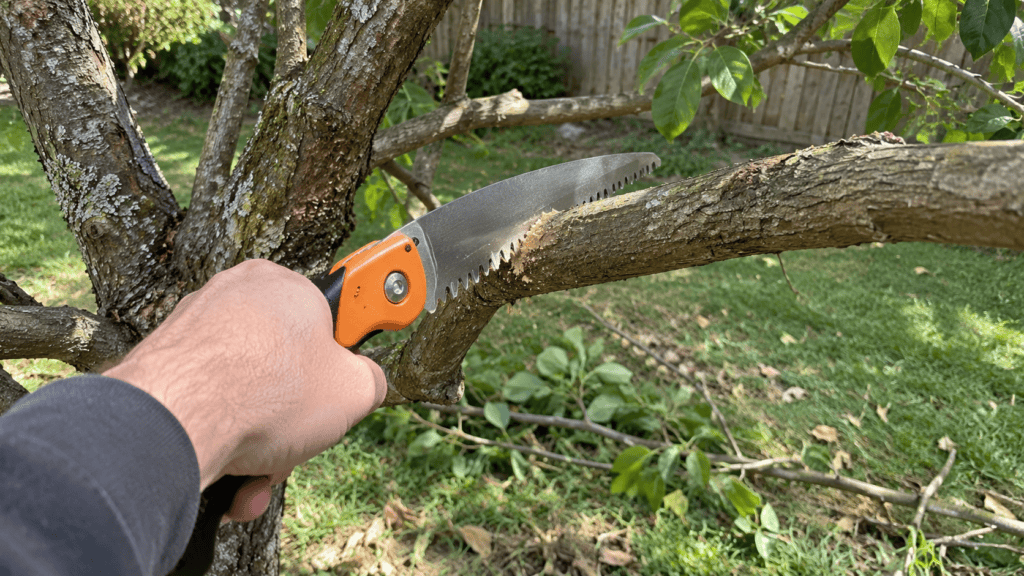
Use a saw when the branch is too large for loppers. A proper pruning saw has teeth designed to cut green wood efficiently. See our best pruning saws.
Pole saw
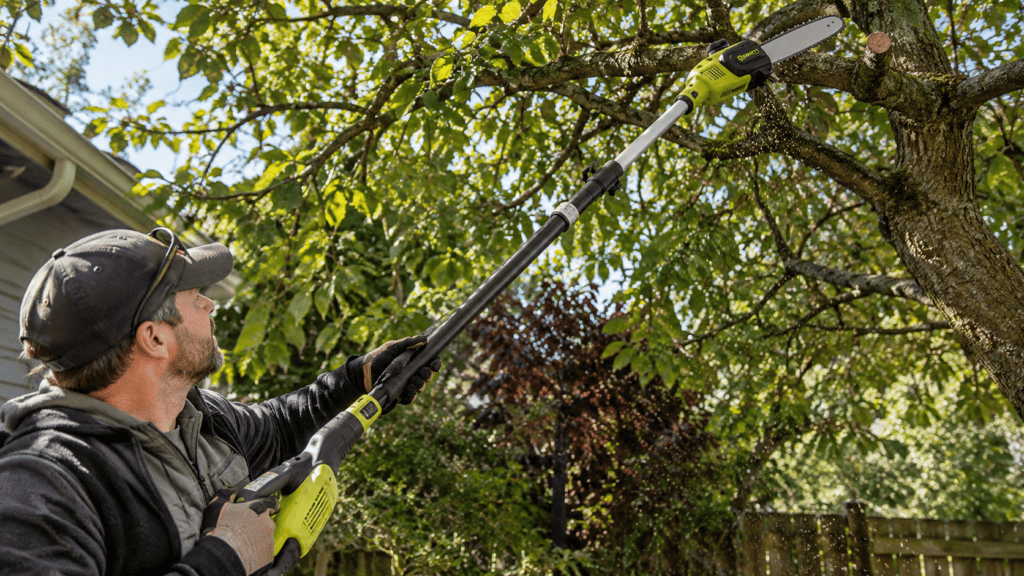
For branches that are beyond comfortable hand reach, a pole saw can keep your feet on the ground. It is harder to make a precise cut at full extension, so use it only within a safe, controlled reach.
Match the tool to branch diameter and reach rather than forcing an undersized tool through a large limb.
How to Make a Reduction Cut
Sometimes you do not want to remove a whole branch. You want to shorten it while retaining a healthy side branch.
Penn State recommends cutting back to a lateral branch large enough to continue the growth of the shortened limb—typically at least about one-third the diameter of the branch you are removing.
This preserves a natural branch structure better than simply chopping a limb at an arbitrary point.
Do Not Top Trees
Topping removes large branches back to stubs without regard for proper branch unions. It often triggers weakly attached shoots and creates large wounds.
If a tree has outgrown its location, use proper reduction cuts or consult an arborist instead of repeatedly topping it.
How Much Can You Prune at Once?
For mature trees, less is usually better. Remove the highest-priority problems first: dead, broken, rubbing or structurally weak branches.
Do not remove a large percentage of the live canopy in a single session just to make the tree “smaller.” Large reductions should be planned over time.
When Should You Prune?
Many deciduous trees are easy to prune in the dormant season, but timing varies by species. Cherry, plum, magnolia and other trees have specific timing considerations.
See our seasonal pruning guide before making major cuts.
Should You Seal the Cut?
Routine pruning paint or wound sealer is generally unnecessary for properly made cuts. Trees naturally compartmentalize wounds.
There are limited disease-specific exceptions in some regions and species, so follow local Extension guidance when a pest or pathogen is a known concern.
Clean and Sharpen Your Tools
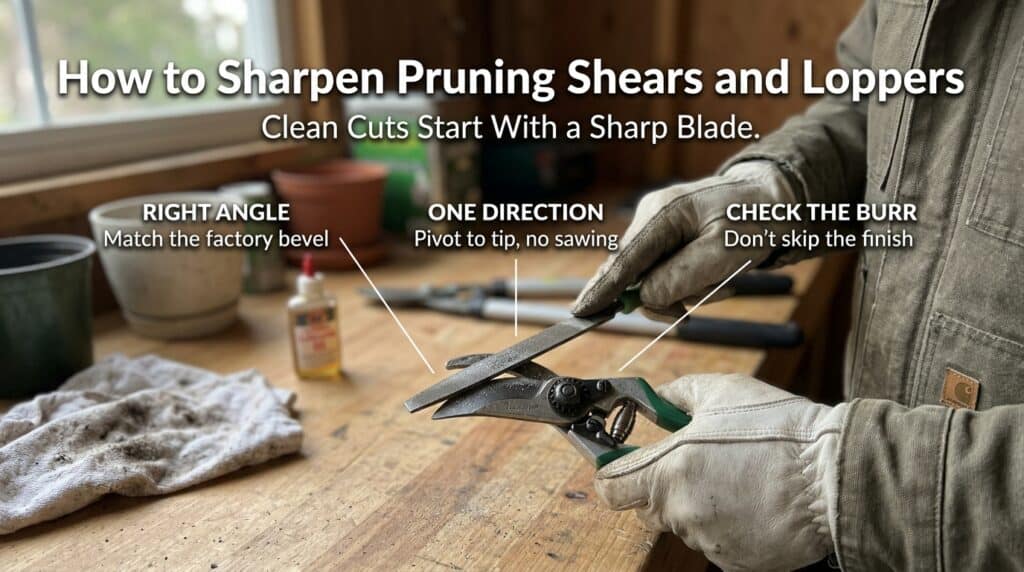
A sharp tool makes a cleaner cut and requires less force. Clean dirty blades before pruning and disinfect tools when moving between diseased plants if local disease guidance recommends it.
Our pruner sharpening guide covers basic maintenance.
Safety: When to Stop and Call a Professional
Do not prune branches near electrical conductors. Never assume a branch or pole tool cannot conduct electricity.
Call a qualified arborist when:
- a limb is over a house, vehicle or public area;
- the branch is too large to control;
- you would need a ladder with a chainsaw;
- the tree has storm damage or a split trunk;
- the branch is near power lines;
- you cannot identify a safe fall zone.
Common Pruning Mistakes
Cutting too close to the trunk
This removes the branch collar and enlarges the wound.
Leaving a long stub
The stub dies back and delays closure.
Using dull tools
Dull blades crush and tear tissue.
Removing too much canopy
Heavy pruning stresses the tree and can trigger excessive sprouting.
Standing under the branch
Plan the drop zone before you cut.
Cutting above shoulder height with a chainsaw
University of Minnesota Extension specifically warns against using chainsaws above the shoulders or from a ladder.
Frequently Asked Questions
How close should I cut to the trunk?
Cut just outside the branch collar, not flush with the trunk.
What if I cannot see a clear branch collar?
Use the branch bark ridge and the angle of the branch union as guides, and avoid cutting into trunk tissue.
Do I need the three-cut method for every branch?
No. It is mainly for branches heavy enough to tear bark when they fall.
Can I prune a tree with a pole saw?
Yes for appropriate branches within safe reach, but precision decreases at full extension. Large or hazardous limbs should be handled professionally.
Should the final cut be perfectly flat?
No. Follow the natural branch collar and bark ridge rather than forcing a flat cut.
Bottom Line
For a proper branch removal, preserve the branch collar and use the three-cut method on heavier limbs. Avoid flush cuts, long stubs and tree topping. Use the smallest tool that safely handles the branch, and call an arborist when the job involves height, power lines or uncontrolled weight.